The quick version
- Drive your own sled behind a team of Alaskan huskies on a 4-hour tour with a live English-speaking guide.[1][2]
- The listing from this site is the Husky Sled Self-Drive with Traditional Lunch, from US$355.[1]
- Rated 4.86 from 2,050 reviews on GetYourGuide.[1]
- Dog sledding on snow in Tromsø is usually available from November to April, depending on snow conditions.[2]
- Book immediately and pay afterwards, with complimentary cancellation until 24 hours before.[1]
- Top choice Self-Drive with Lunch from US$355 Duration4 hours[1]Rating4.86 from 2,050 reviews[1]Live guideEnglish[1]CancellationFree up to 24 hours in advance[1] Check availability
- Northern Lights Husky Visit from US$188 Duration4 hours[3]Rating4.64 from 1,732 reviews[3]Live guideEnglish[3]CancellationFree up to 24 hours in advance[3] See this tour
- Tamokdalen Dog Sledding from US$356 Duration7 hours[4]Rating4.86 from 1,530 reviews[4]Live guideEnglish[4]CancellationFree up to 24 hours in advance[4] See this tour
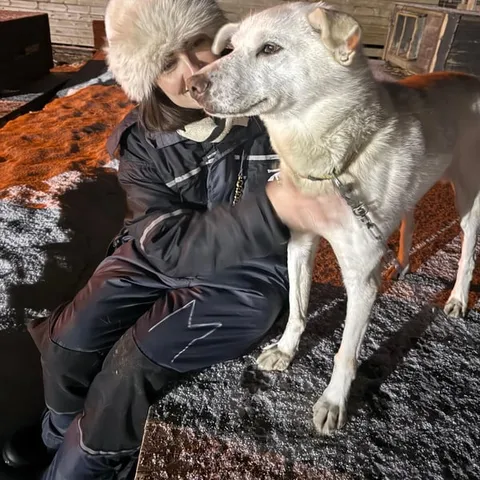
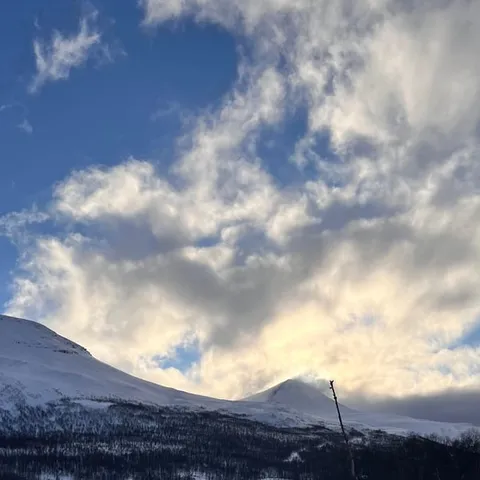
Midnight sun in Tromsø usually lasts from around 20 May to 22 July.
A practical, thrilling husky day in Tromsø
What the tour covers
- Reserve online with free cancellation
- Plan for a half-day husky outing
- Live English-speaking guide
- Traditional lunch after the ride
What to bring yourself
- Warm base and mid layers
- Insulated winter boots
- Gloves, hat and neck gaiter
- Lip balm and face protection
Most of the day is handled for you
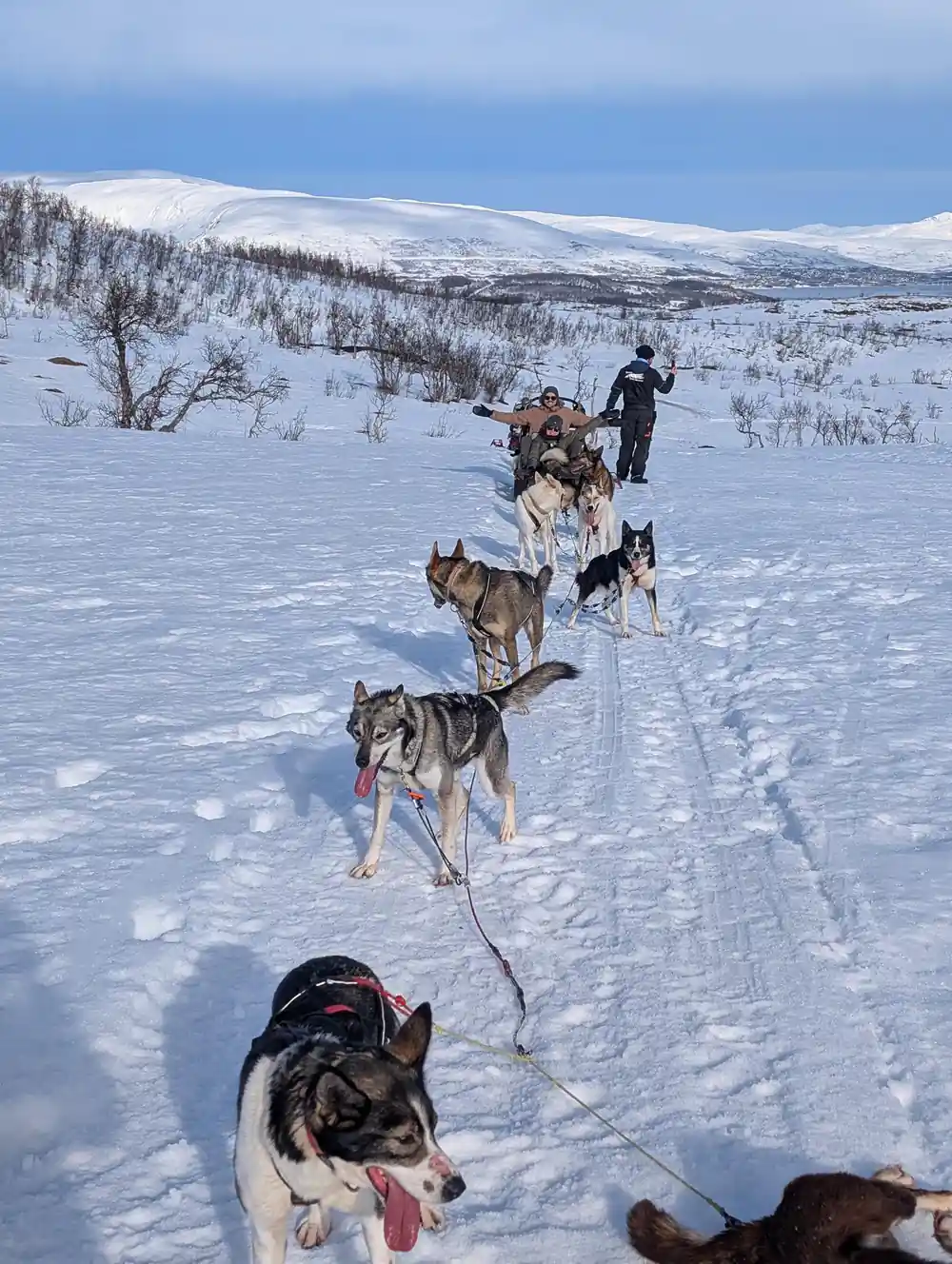
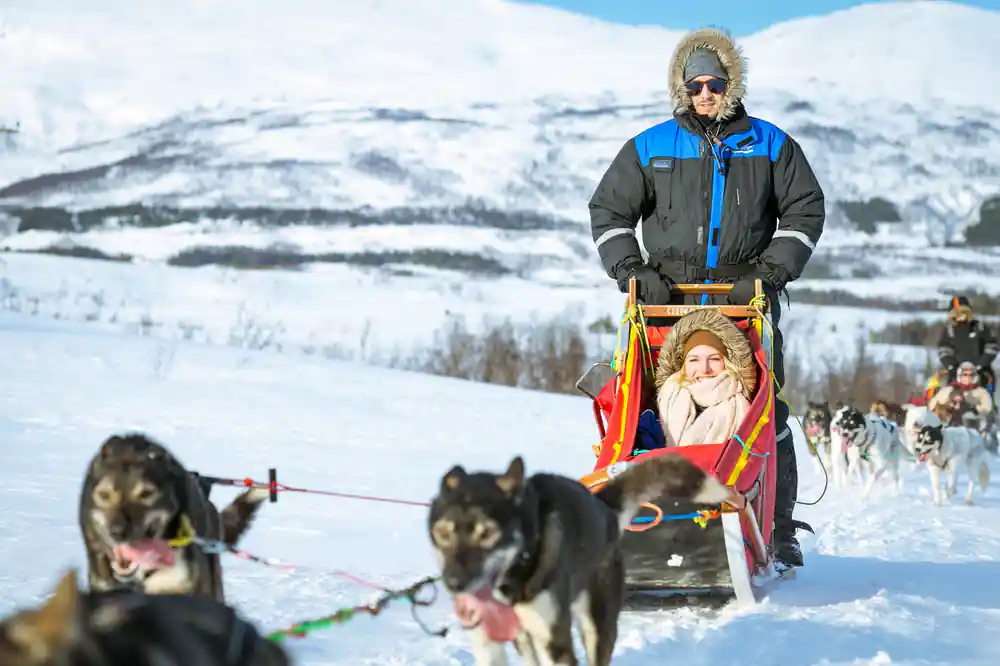
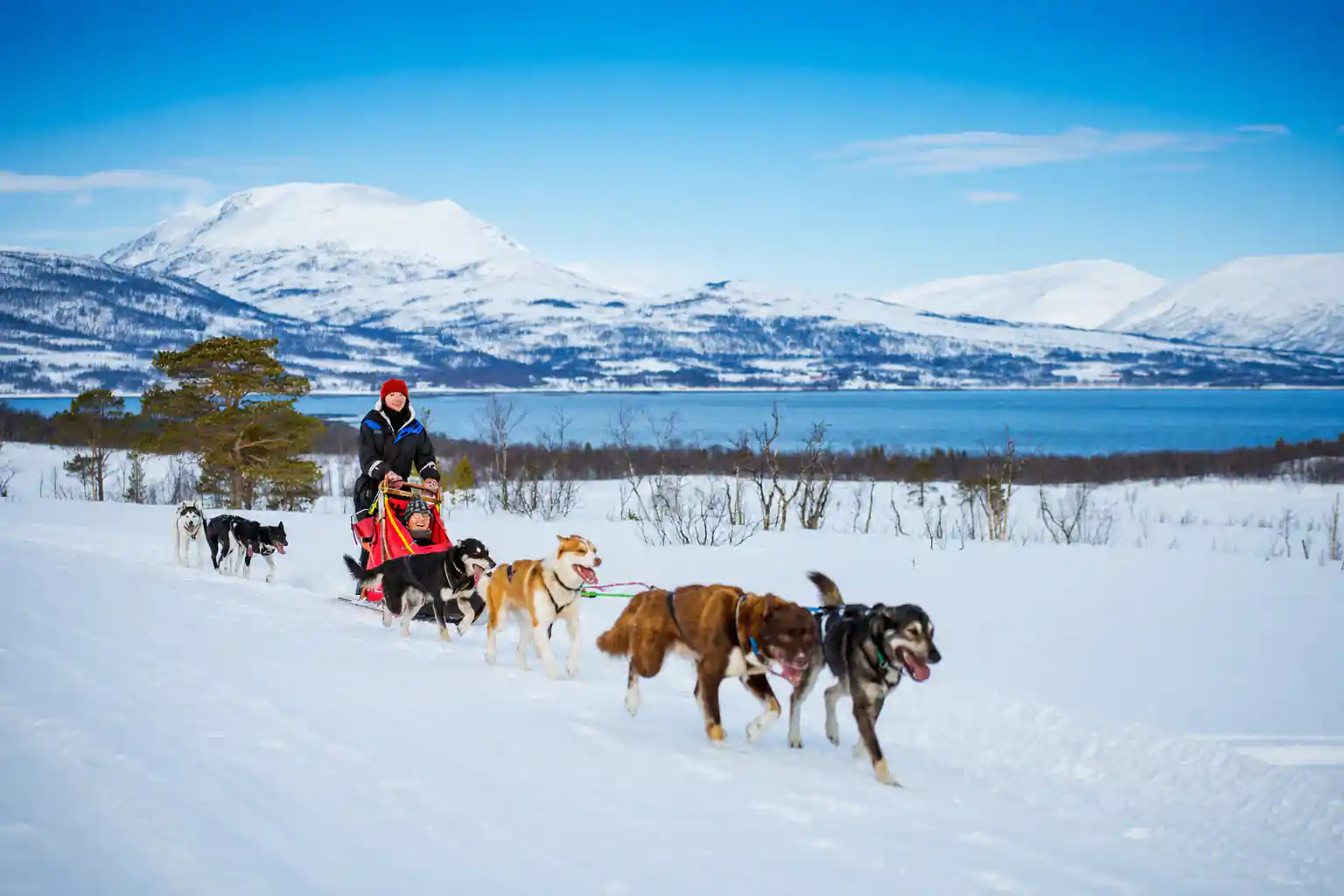
The tour booked from this site is the Tromsø Husky Sled Self-Drive with Traditional Lunch. It lasts 4 hours, is guided live in English, and is priced from US$355.[1] You are not a passenger tucked into a carriage. You stand on the runners, hold the sled, and drive a team of huskies along a snowy trail. The mushers explain the sled and the commands, so the day works for beginners and for people who have mushed before. The structure is simple: meet the team, get settled, listen to the briefing, then head out on the trail.
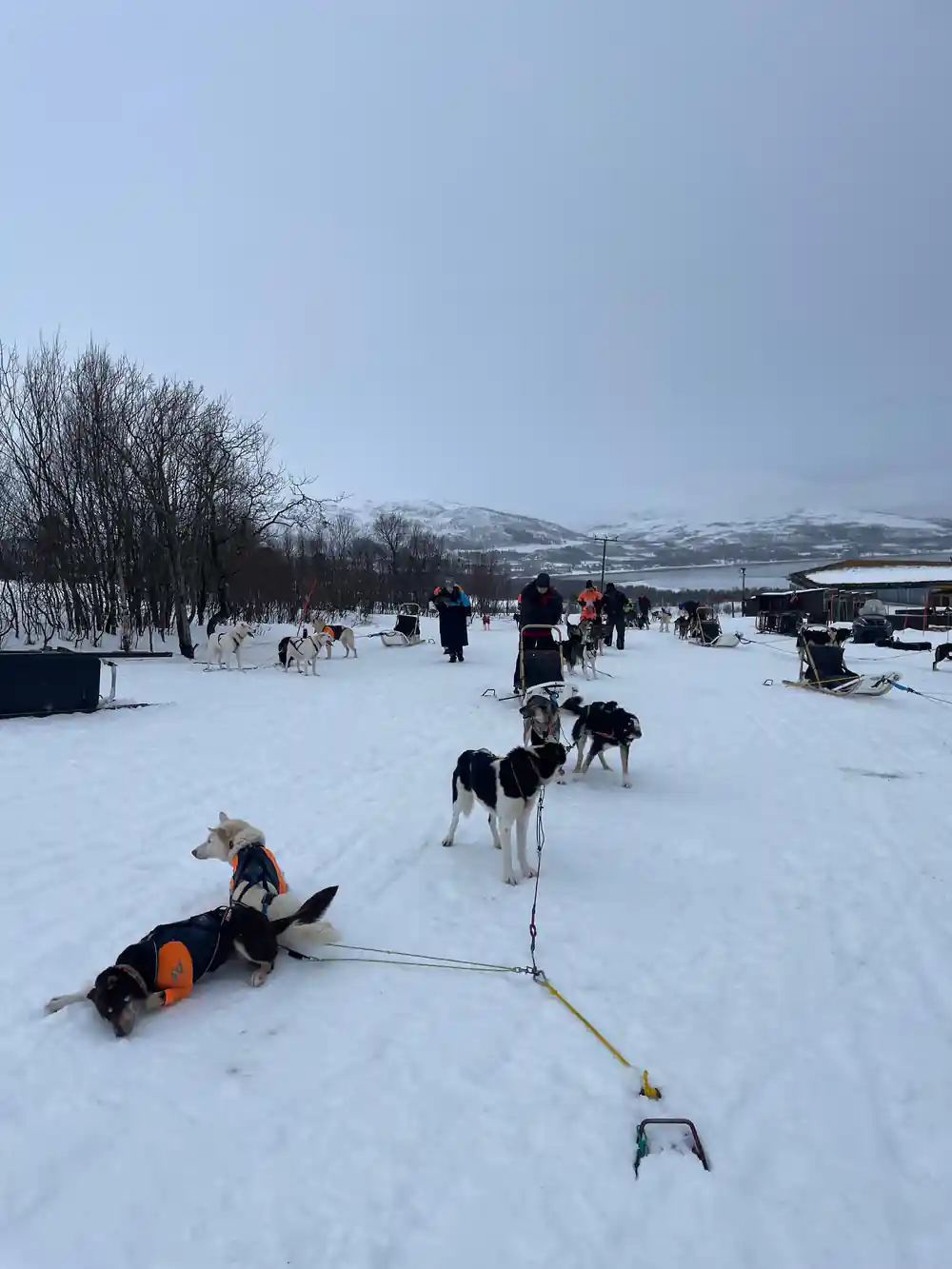
Dog sledding on snow in Tromsø is usually available from November to April, depending on snow conditions.[2] That is a long winter window, and it means the tour is a true cold-weather outing. The practical question is not whether you will be outside; it is how to stay comfortable while you are. Expect a working kennel with organised departures, careful instructions, and a traditional lunch after the ride. Because the tour is active, the right clothing is more important than the right technique. The guide stays close, the dogs know their work, and your job is to balance, enjoy the landscape and keep your hands and feet warm. This page is a packing guide for exactly that moment when the sled starts to move.
You do not need prior mushing experience. You stand on the runners and drive the sled yourself, with the guide close by and giving clear signals. The main preparation is clothing, and that is what the rest of this page covers. If you are travelling as a pair, take turns behind the sled and on the runners if that is how the tour runs, and listen carefully when the team explains braking and steering.
What goes on before the suit
Start with a moisture-wicking base layer that covers your arms and legs. Over that, add a fleece or light wool mid layer. The aim is to trap warm air without turning into a stiff, sweaty package, because dampness makes cold feel colder. A breathable layer against your skin keeps you drier than cotton, and wool or synthetic materials work better than a heavy sweater. You do not need specialist mountaineering clothing; you need the confidence that you can stand still during a briefing and then move, brake and balance on the sled without overheating.
The practical weather cue is Tromsø's average winter temperature, around -4°C.[5] That is cold enough for every layer to earn its place, but it is not extreme enough to require a huge down suit for a short active tour. A solid ski or snow jacket is enough as an outer layer, especially when you are generating heat by driving. Warm trousers matter just as much. Ski trousers, padded salopettes or close-fitting snow pants over a base layer keep your legs comfortable while you stand. Avoid jeans; wet denim stays cold and heavy. This is the point where one careful choice saves you from a chilly second half of the ride.
For a short transfer from the meeting point to the kennel, a light backpack is easier than a large shoulder bag. Keep your hat and gloves in an outside pocket where you can reach them quickly. The layers you wear on the sled should be the layers you can manage while wearing mittens or thick gloves. Zips, toggles and pockets that are easy to open make a surprising difference in the cold.
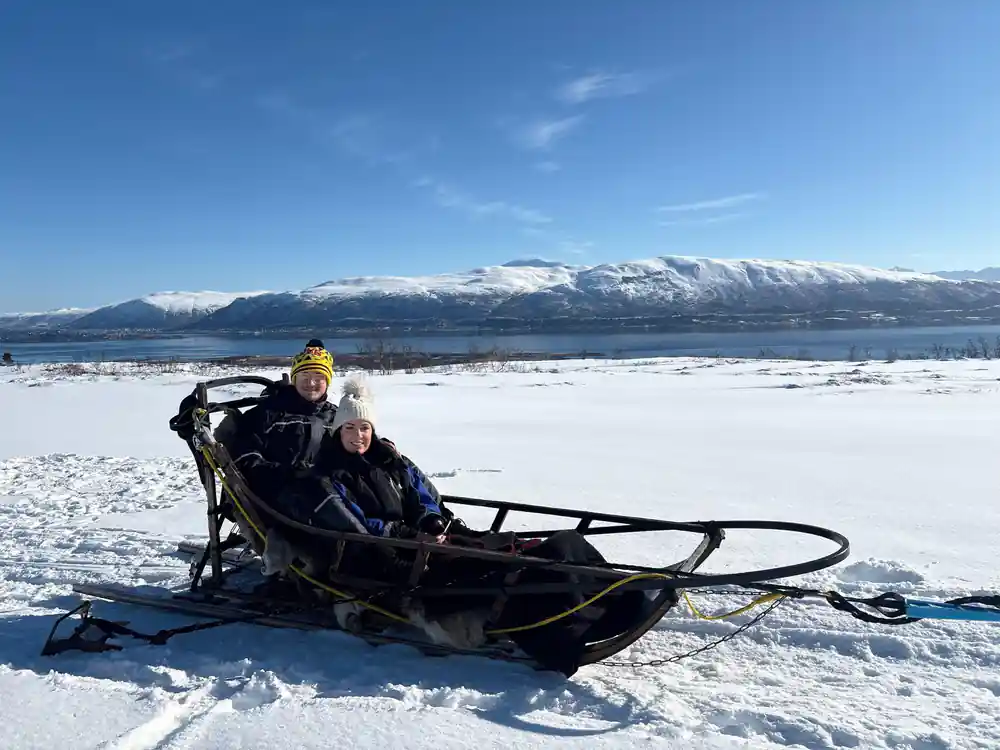
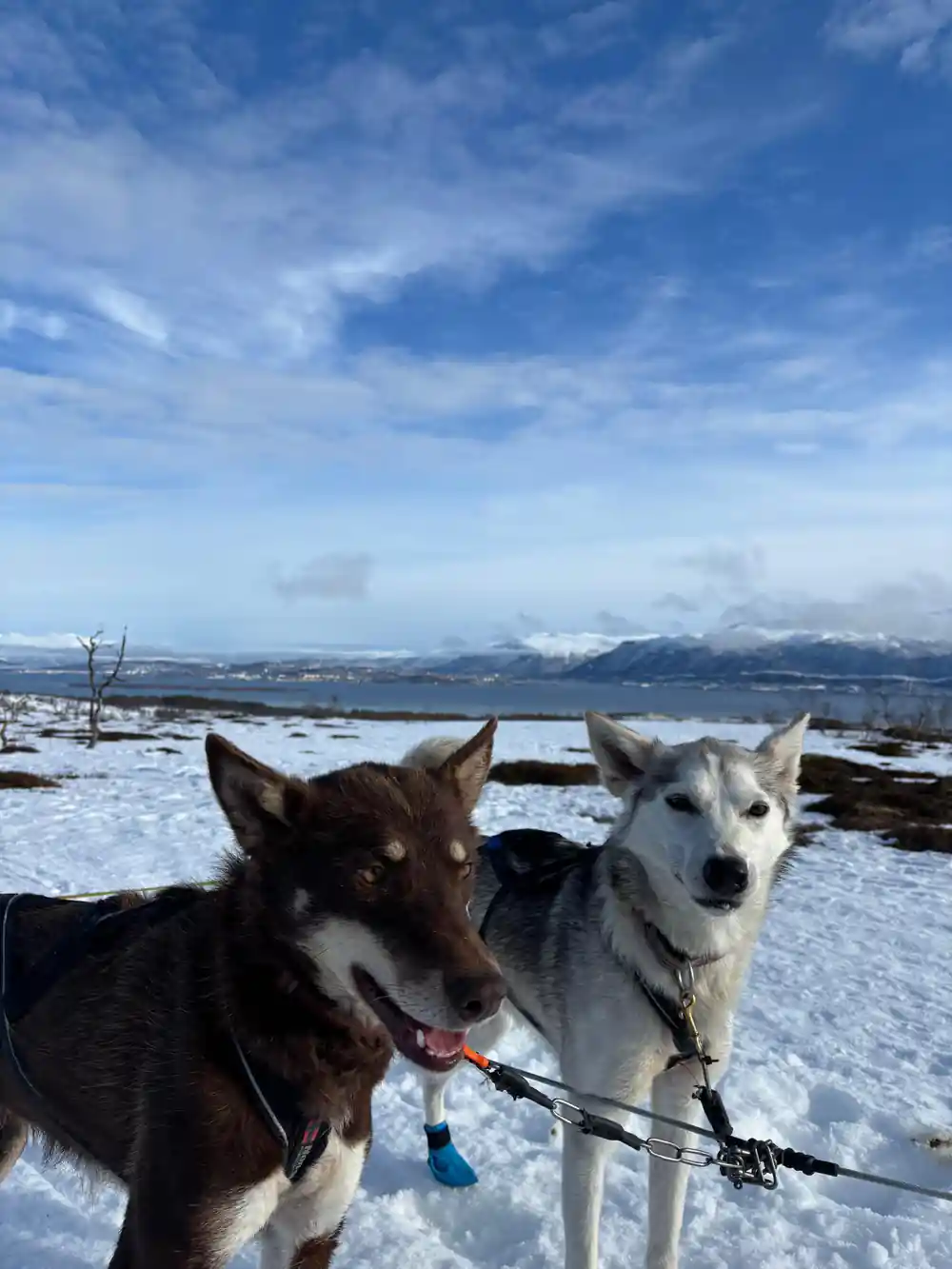
A team of Alaskan huskies running on a wide snowy plateau.
Hands, face and glasses
Your hands are in constant contact with the sled and the rope, so choose insulated gloves or mittens that still let you grip. Many people find mittens warmer, and some prefer thin liner gloves inside them for dexterity. Keep your wrists covered so no bare skin meets the wind. A buff or light neck gaiter is more useful than a thick scarf. It stays in place under a hat, can be pulled up over your nose on the trail, and takes up almost no room in a pocket. Sunglasses or clear ski goggles protect against snow glare and wind, and if you wear glasses, look for goggles that fit over them or use wraparound sunglasses.
Do not forget lip balm and face cream. Cold, dry air and wind can chap exposed skin quickly, and a small tube in your pocket lets you reapply while the sled is stopped. This is the kind of simple check that makes a husky experience in Tromsø feel comfortable from the first minute to the lunch table. The same principle applies to your nose and cheeks: a little protection before the tour begins is easier than trying to warm wind-chapped skin afterwards. If it is bright, snow glare can surprise you, so keep eye protection somewhere you can reach it without dropping your gloves.
Pack a spare pair of thin gloves in case your first pair gets damp. Wet gloves are hard to dry on the trail, and cold fingers are the quickest way to spoil the experience. If you usually wear jewellery, leave rings and bracelets at home; metal conducts cold and can catch on ropes. Keep everything simple and close to your body.
Feet, socks and the boots you're given
Your feet rest on the sled runners and take the cold directly. Wear one pair of thick wool socks, not two; two pairs can compress and reduce circulation. Insulated winter boots with a firm sole and good tread will serve you best. Many city winter boots have smooth soles, which is fine for pavements but less useful on packed snow. Lightweight snow boots with decent grip work well on the trail and around the kennel. Tucking your trousers into your boots keeps snow out and stops cold air from moving up your legs.
If the kennel offers thermal boots, make sure they are dry before you put them on. It is also sensible to carry a plastic bag for your indoor shoes, and to wear socks you do not mind getting damp after a day in snow. Standing still during briefings can chill you faster than the ride itself, so soft, warm footwear makes a real difference. You want to be able to move your toes freely and plant your feet firmly when the sled is moving. Boots that are too tight will make your feet cold no matter how thick the socks are, so aim for a comfortable fit with room to wiggle your toes.
If you have room, carry spare socks in the same bag as your camera. A fresh pair after the ride is a small luxury, especially if the trail is wet. It also gives you a backup if the snow finds its way over the top of your boots. The goal is simple: warm, dry feet from the briefing to the lunch table.
from US$355
Book the self-drive husky sled tour with traditional lunch in Tromsø and a live English-speaking guide.
Tromso's own temperature, for scale
At 69°N, Tromsø lies 400 km to the north of the Arctic Circle, with an average winter temperature of about -4°C.[5][6] That is a useful packing clue. This is cold, but it is a coastal cold, and a well-layered outfit that works for a snowy city walk is the right starting point for a husky safari in Tromsø. Tromsø experiences polar night from about 27 November to 15 January[7]. If you visit then, daylight is limited, but the kennel and the trail keep their winter rhythm, and the darkness adds to the sense of adventure.
The northern lights may be visible in the Tromsø region from late August to early April, whenever the sky is dark and sufficiently clear.[8] A daytime husky tour is not the moment to chase them, but the same winter weather that brings snow also brings long, dark evenings. In summer, the midnight sun typically lasts from around 20 May through 22 July.[9] Whatever the season, the layering advice stays similar whenever snow is on the ground. Check the local forecast before you pack and adjust from there, rather than relying on a single temperature number.
Coastal Arctic weather can change quickly. A packable windproof layer is a sensible extra even if the forecast looks calm. It weighs almost nothing, takes little space, and gives you confidence when a gust crosses the plateau. The guide will know the conditions on the trail, so ask if you are unsure about what to wear.
Cameras, phones and cold batteries
Cold drains batteries faster than normal, so keep your phone in an inner pocket close to your body, and carry a small power bank in your pack during your Tromsø husky adventure. For a camera, a spare battery in a warm pocket can be swapped in when the first one drops. A neck strap or wrist strap is practical; both hands need to be ready on the sled. Charge your phone before the tour and close background apps before you head out, so you can point and shoot quickly without fumbling in the cold.
A small dry bag or zip pouch is useful for spare gloves, a hat and a phone. Snow can blow onto the sled, and kennel paths are wet in places. Do not worry about capturing every corner of the trail. The best memory is often the sound of the dogs, the bite of the wind and the rhythm of the runners under your boots. If the light is low, let the guide and the conditions set your expectations. A few clear frames of the team are more valuable than a hundred rushed shots taken with cold, stiff hands.
It is worth testing your camera or phone before the tour, so you know how to switch between photo and video without taking off your gloves. Set the touchscreen to work with thicker fingers if your phone allows it. A screen that stays off until you need it saves battery, and a small dry pouch protects it from falling snow.
What you do not need to buy
You do not need to arrive with a full polar expedition kit. A good base layer, warm mid layer, insulated trousers and winter boots will see you through a 4-hour Tromsø husky experience.[1] The tour is active, so a normal winter wardrobe for a northern Norwegian town is a sensible starting point. Alaskan huskies are widely used for dog sledding in the Tromsø region.[2] You do not need to bring dog food, treats or extra gear for them; the kennel team manages the dogs.
What is worth buying, if you do not already own it, is a simple pair of insulated gloves, a warm hat and something to protect your neck. These small items make a big difference on the runners. You also do not need a new camera for one outing if your phone takes good pictures. After the ride, the traditional lunch is part of the listing, so the main thing you need is an appetite and a sense of adventure. Keep the extras light, keep your hands free, and let the huskies do the heavy work.
Above all, arrive with realistic expectations. A winter tour is not a race; it is a chance to move through snowy landscape with animals that love to run. The weather might be bright or grey, the light might be low, and the trail might be slower than you expected. Dress for the real Arctic, keep your camera ready, and let the day unfold.
Tour durations in hours
Tour from-prices in US dollars
From-prices in US dollars from GetYourGuide listings:[1][3][4][10]
When to plan your husky trip
Husky safari from Tromsø
Book the date
Choose your date and secure the listing with free cancellation up to 24 hours in advance.[1]
Layer up
Base layer, fleece, insulated trousers, winter boots, gloves and a neck gaiter.
Pack the trail kit
Small dry bag, spare gloves, lip balm, face cream and a spare battery.
Arrive and listen
Arrive at the kennel ready to listen. The guide speaks English and will explain how to drive the sled before you set off.[1]
Enjoy the drive
Stand on the runners, keep your weight steady, and enjoy the trail.
Ready to meet your husky team and drive through the snow?
from US$356Reserve now & pay later