The quick version
- Alaskan huskies are widely used for dog sledding in the Tromsø region.[1]
- The Husky Sled Self-Drive with Traditional Lunch runs 4 hours with a live English guide.[2]
- Dog sledding on snow usually runs from November to April, depending on snow conditions.[1]
- From US$355 with free cancellation up to 24 hours and reserve now, pay later.[2]
- From late August until early April, Tromsø may see northern lights.[3]
- Top choice Self-Drive Husky Sled from US$355 Duration4 hours[2]Rating4.86[2]GuideLive guide: English[2]VibeSelf-drive with lunch Check availability
- Northern Lights Husky Visit from US$188 Duration4 hours[4]Rating4.64[4]GuideLive guide: English[4]VibeEvening husky visit with dinner See this tour
- Tamokdalen Dog Sledding from US$356 Duration7 hours[5]Rating4.86[5]GuideLive guide: English[5]VibeFull-day valley adventure See this tour
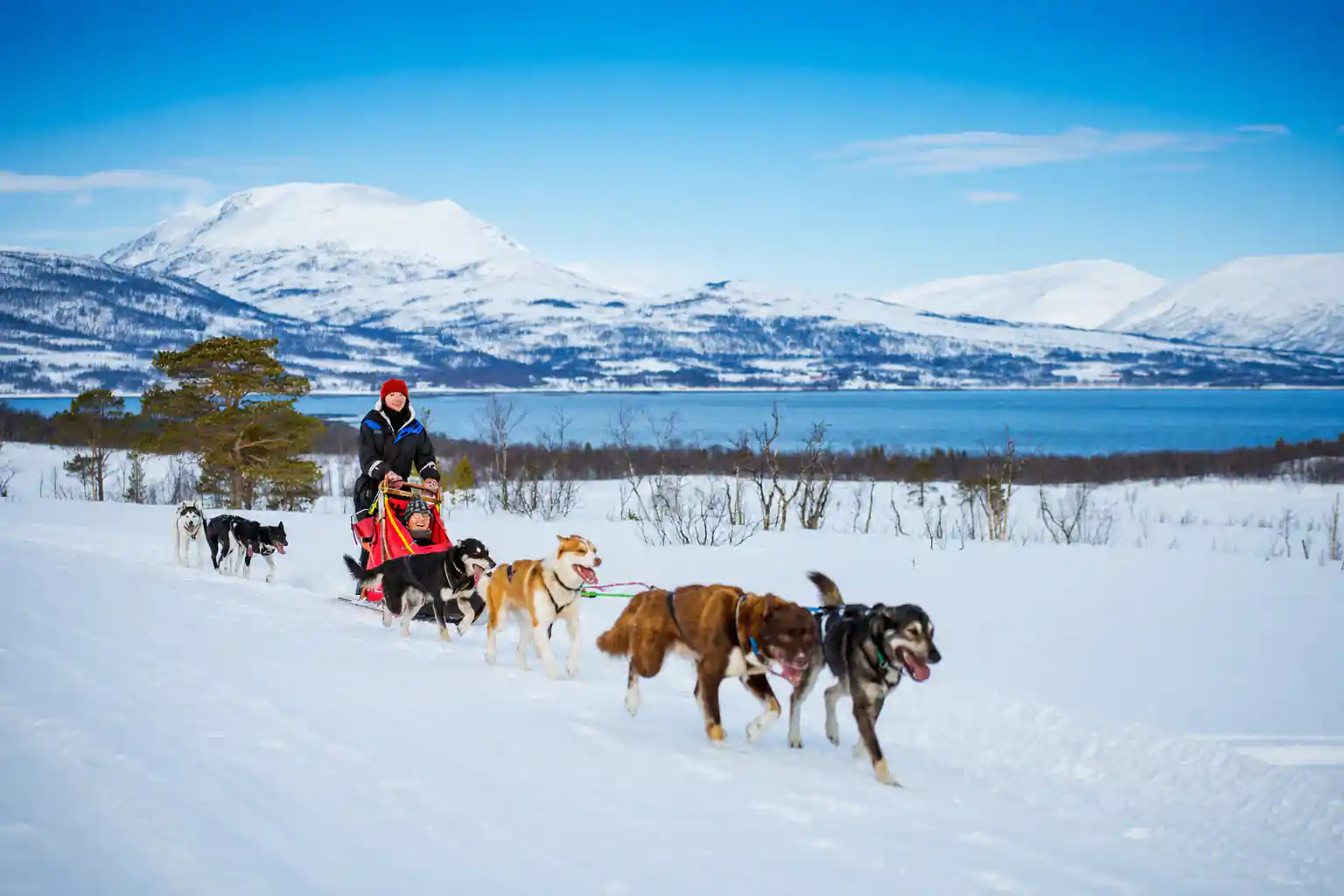
Alaskan huskies are widely used for dog sledding in the Tromsø region.
Why This Self-Drive Husky Tour Works
Season and timing
The Breed Bred to Pull
Talk to anyone who has stood behind a Tromsø sled dog team and the first thing they will tell you is that the dogs are the ones in charge. There is no better introduction to Arctic winter than standing behind a team that cannot wait to leave. The breed most likely to be pulling you across the snowy fields is the Alaskan husky, not the fluffy pet you may have pictured. Alaskan huskies are widely used for dog sledding in the Tromsø region.[1] They are built for distance, for cold and for the simple joy of running in harness.
The dog sledding season on snow usually runs from November to April, depending on conditions.[1] That timing places a husky day in the heart of Arctic winter, when daylight is short and the landscape is at its most dramatic. Tromsø lies at 69°N, 400 km to the north of the Arctic Circle[10] The cold, the snow and the long nights are part of the deal, and the dogs love them.
You do not need to arrive knowing anything about sled dogs or mushing. The guides handle the teaching, the commands and the safety. What you need is curiosity, a sense of humour and warm clothes. Step in, hold the bar and let the team show you how it is done.
Paired Along the Line
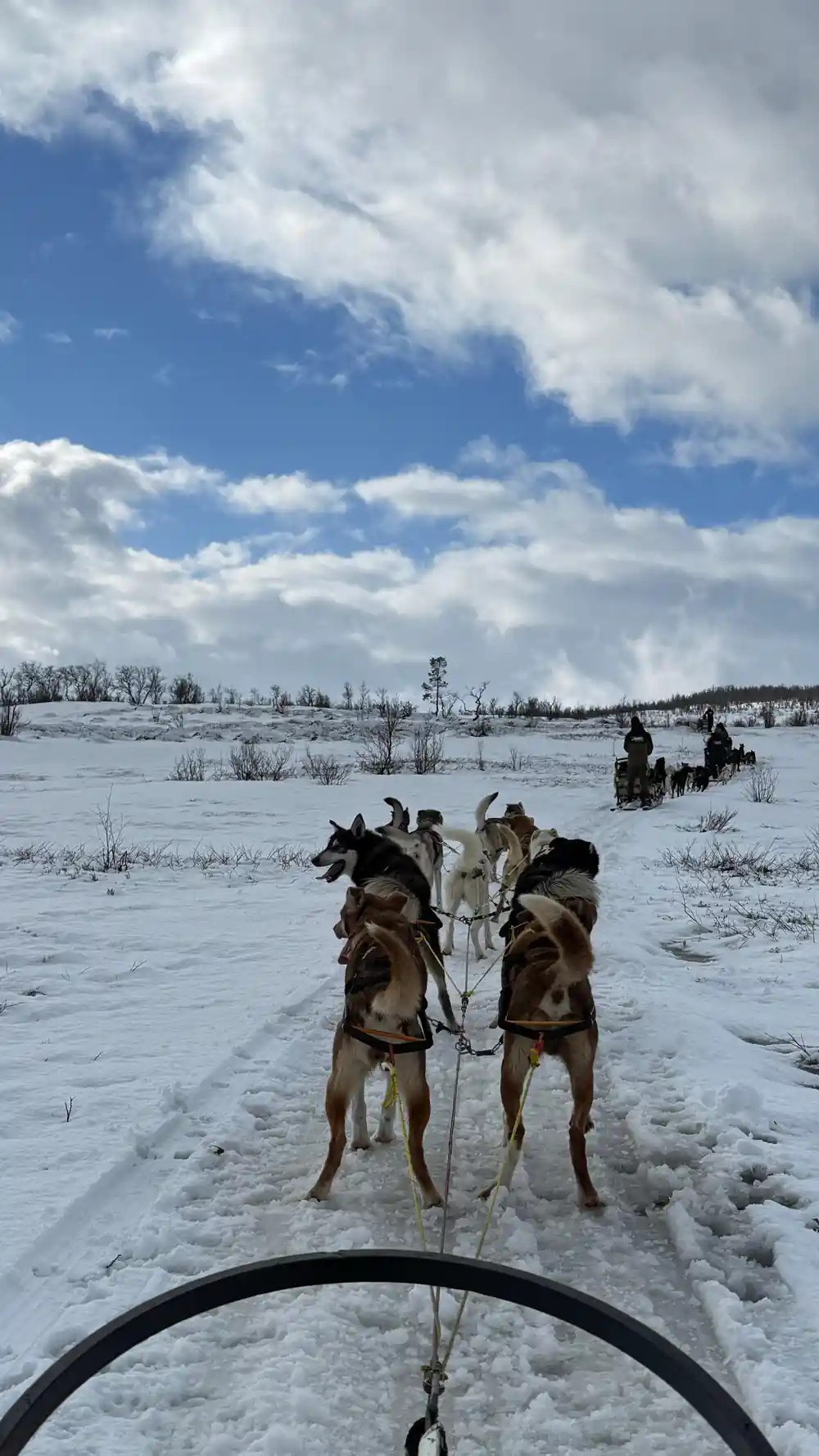
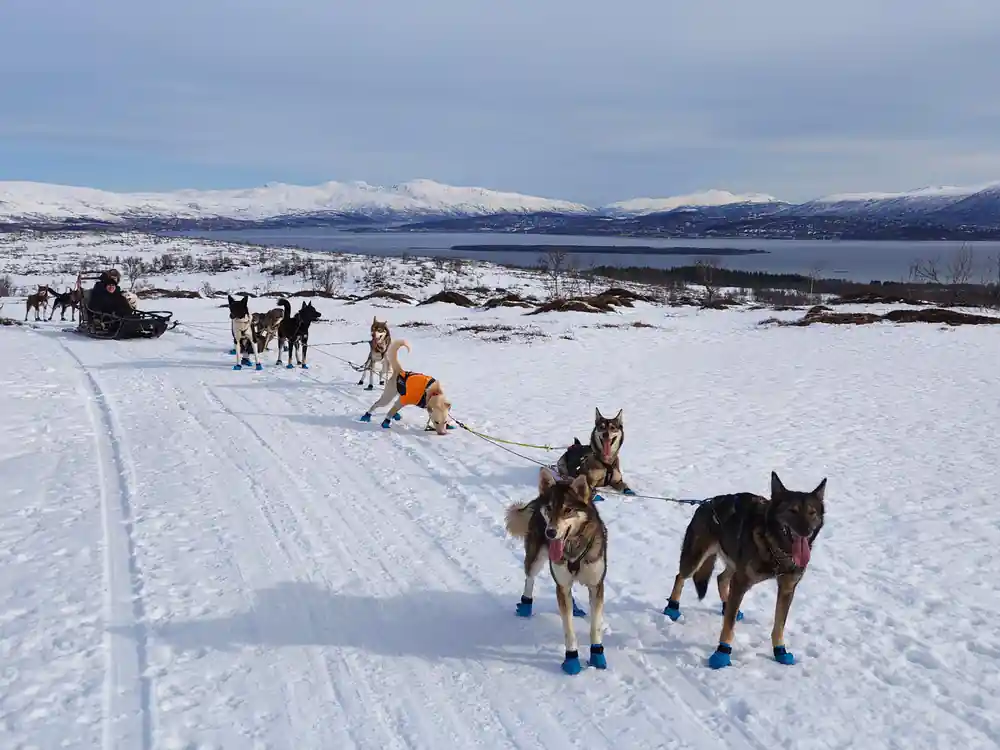
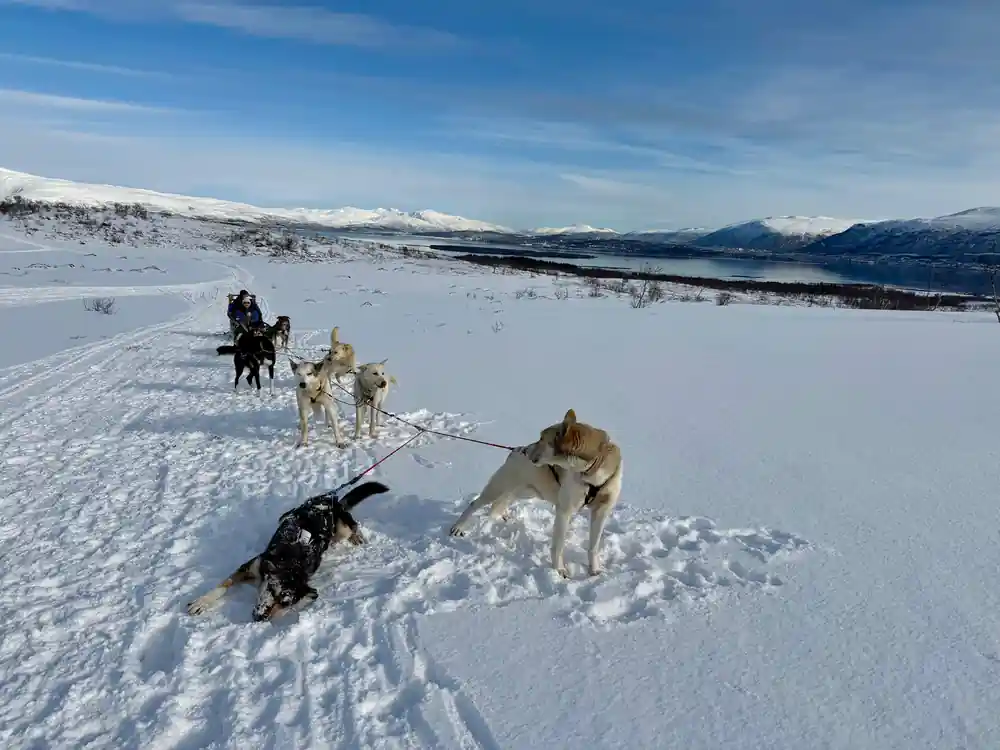
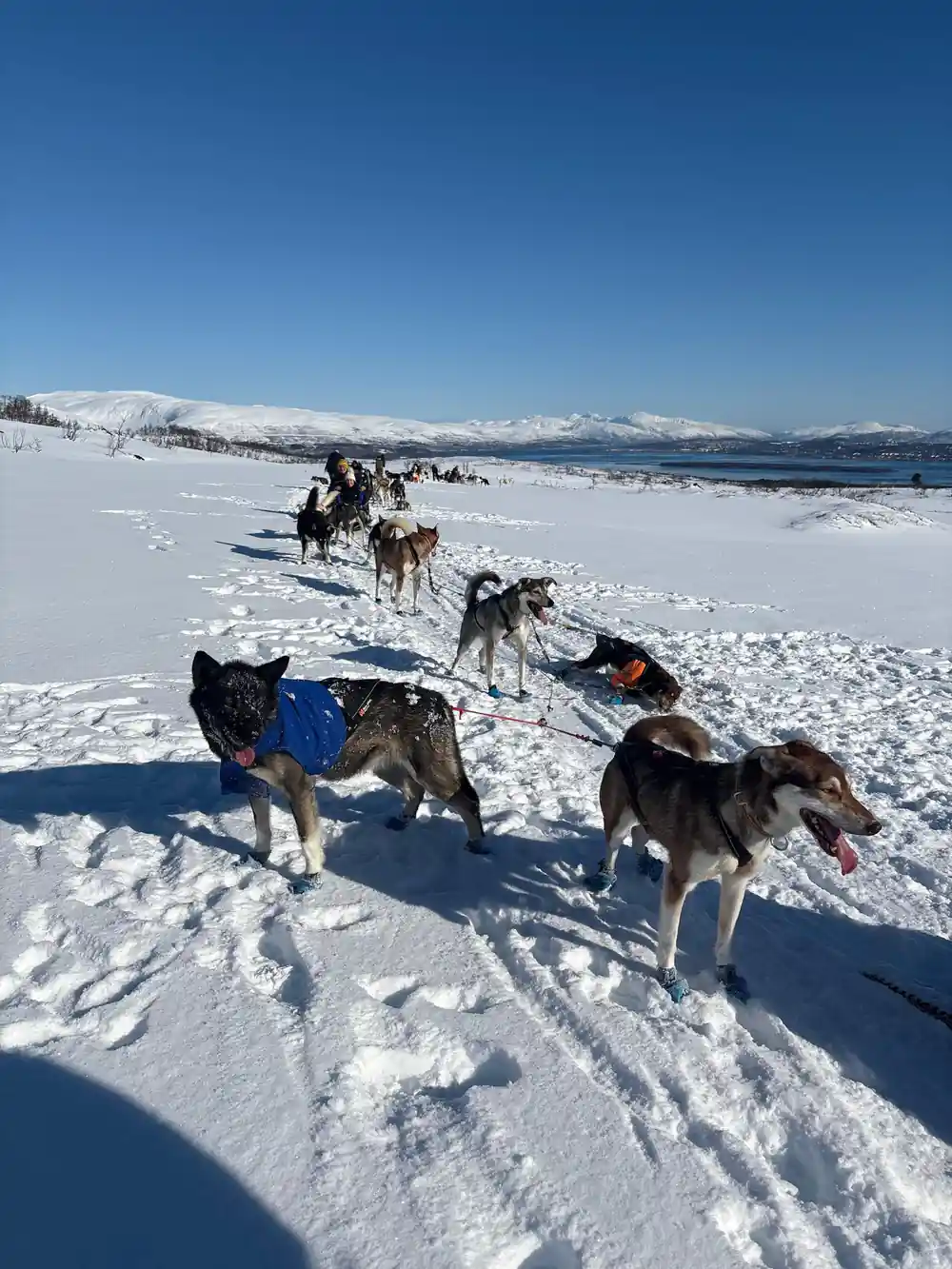
Look at a sled dog team before it moves and you will notice the pairs. Dogs are matched along the line by temperament, strength and experience, each pair with its own job. There is a rhythm to the way they lean into their harnesses, ears back, tails curled, waiting for the word. The self-drive tour puts you on the runners, so you feel that rhythm through the sled rather than watching from a bus.[2]
A working team is not a random pack. The mushers know each dog's name, personality and favourite spot in the line. The dogs are not interchangeable. They are paired for balance, for pace and for mood. That care is part of what makes the experience feel so different from a theme-park ride. These are serious athletes. A single tromso sled dog is a compact powerhouse, built to run for hours in extreme cold.
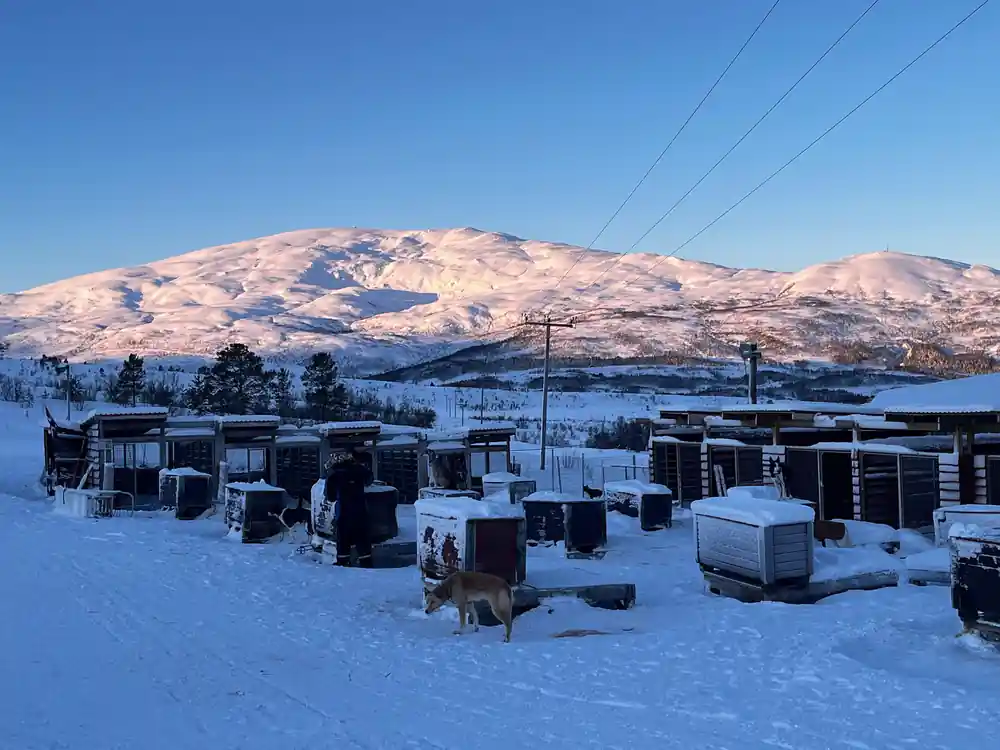
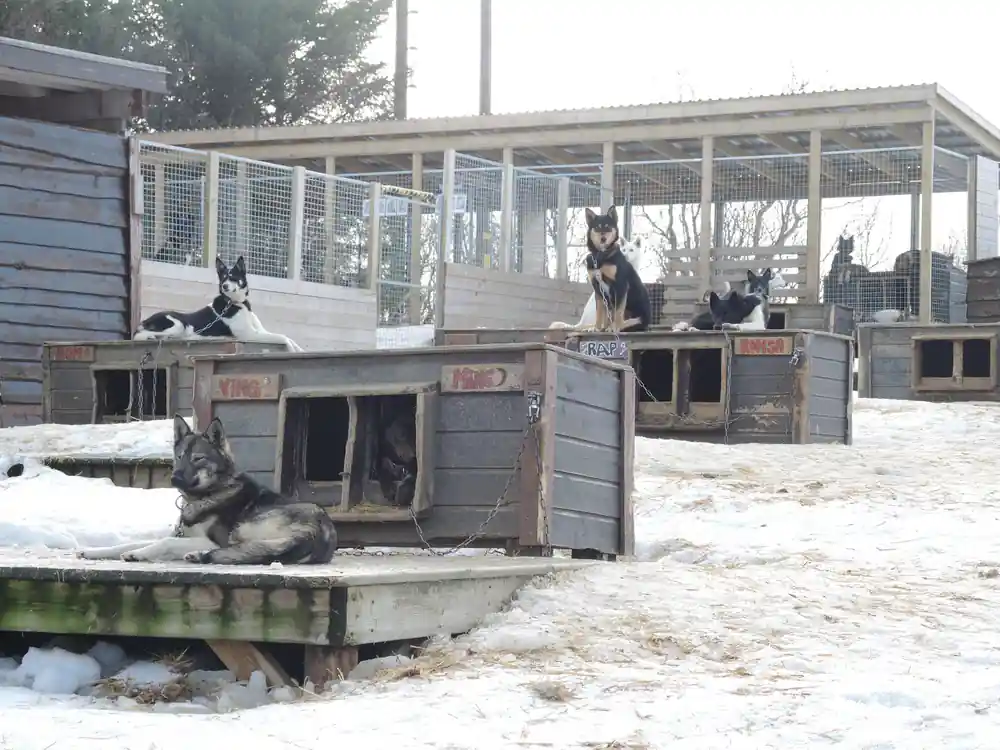
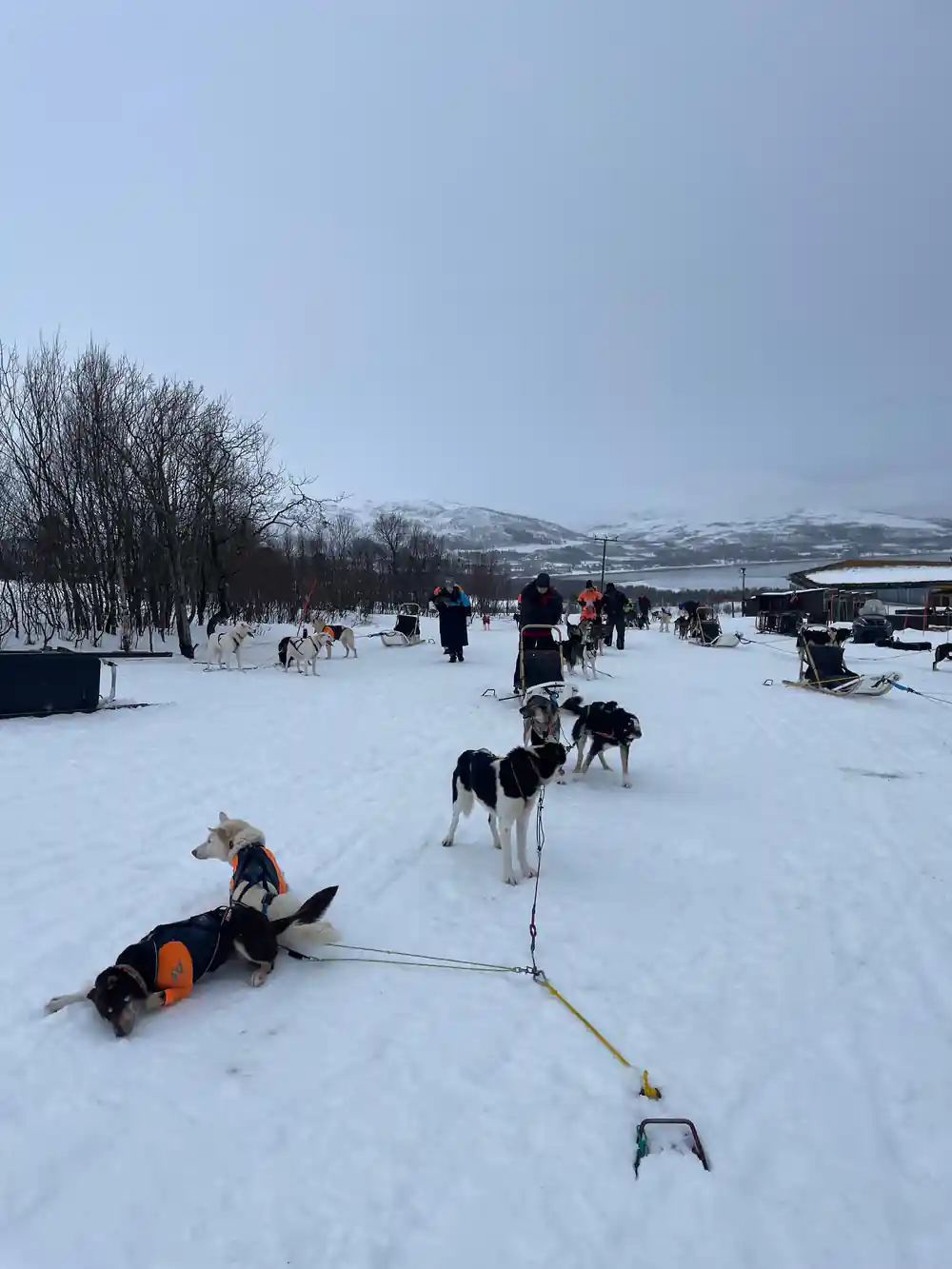
If you visit the kennel before departure, you will see the dogs standing on their houses, barking, bouncing, sometimes rolling in the snow. The noise is enormous. The excitement is real. It is the sound of animals who love their work.
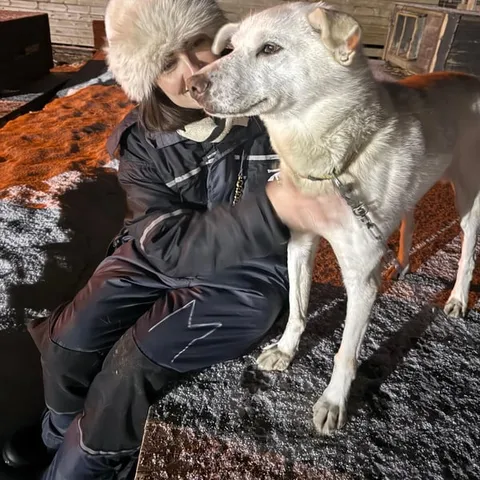
Two sled dogs stand by their kennel boxes while the snowy trail waits beyond.
The Noise Before You Move
The kennel erupts before the sleds move. If you have never been near a team of excited huskies, the volume can be a surprise. Dogs howl, bark and spin in their lines, each trying to tell you that they should be first out of the yard. Mushers walk up and down, checking harnesses and settling the animals. This is the moment when tromso sled dogs become something you hear, not just see.
Then a command comes, one dog leans in, and the whole line remembers what it is for. The noise changes. The sled glides forward, and you are moving. You do not need to know the commands. The dogs know them. All you need to do is hold on and trust the line.
This is also the moment to be honest about the weather. In Tromsø, winter temperatures average roughly −4°C.[9] Inland, where the kennel sits, it can feel colder. Dress in layers, tuck in your scarf, and the work of driving the sled will keep you warm.
The Silence Once You're Moving
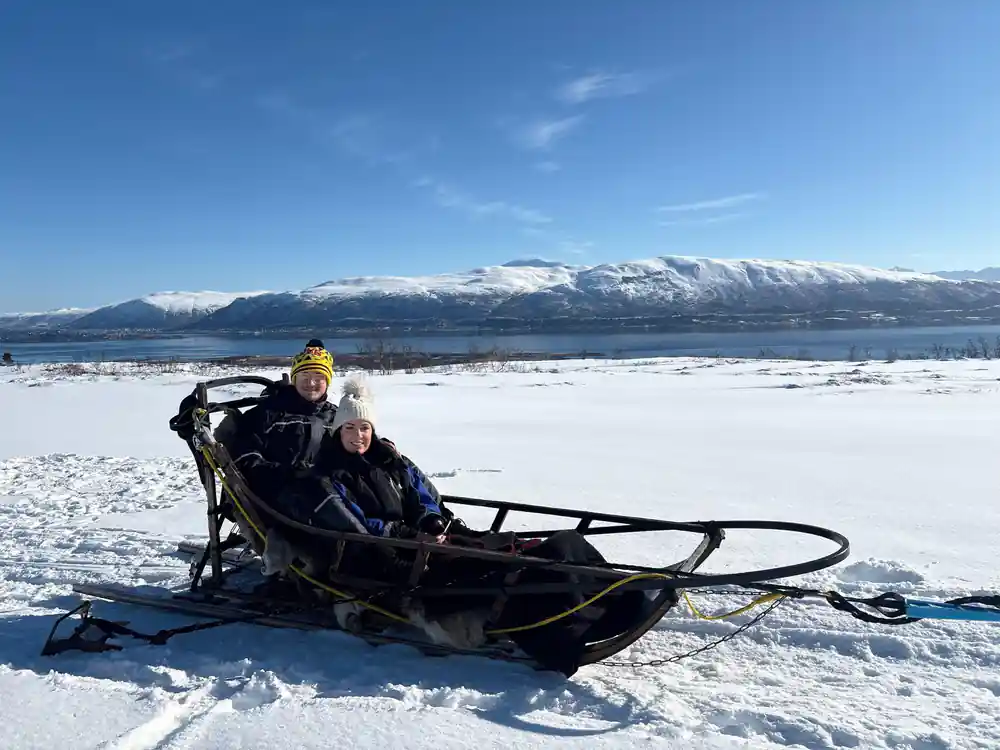
Once the team is running, the world goes quiet. The snow swallows the sound of paws, the sled runners hiss, and the barking fades behind you. You are standing on a small wooden platform, holding a handlebar, watching the backs of dogs doing exactly what they were born to do. For something with so much power in front of it, the whole thing is surprisingly peaceful.
The 4-hour tour gives you time to settle into that quiet rhythm, with a live English guide along for the trip.[2] The tour lasts long enough to find your balance and short enough to stay happy. If you visit during polar night, roughly 27 November to 15 January, the light may be deep blue rather than full sun.[6] If you are later in the season, you may catch the first returning sun on the ridgelines. Either way, the dogs keep running.
There are no traffic jams out on the trail. There is just the squeak of the sled, the breathing of the dogs and the occasional call from the musher. This is the part people remember when they talk about husky sledding in northern Norway.
from US$355
Self-drive a husky sled across Arctic snow with a live English guide and a traditional lunch.
Strength Without Size
A sled dog does not look like a giant. Most are medium-sized, lean and athletic, with thick paws and a dense coat. Their strength is in their endurance and their attitude. A tromso sled dog can pull far more than its own weight because it wants to, not because it has to.
The longest dog-sled race in Europe is Finnmarksløpet, and it shows what these dogs are made of.[11] You will not be racing in Tromsø, but you will be sharing the trail with dogs that carry the same spirit. Respect their strength and they will give you a smooth, steady ride.
Mushers read their dogs constantly. A tucked tail, a dropped head, a limp on the snow, all of it matters. Part of the joy of the tour is watching that attention up close. The dogs are not machines. They are partners, and they are treated that way.
Working Animals, Not Pets
It is tempting to hug every dog you meet. The mushers will show you how to interact properly instead. These are working animals, not pets, and they are happiest when they are treated with calm respect. You will see them stretched out in the snow, wagging tails, waiting for their turn, and you will want to stay forever.
Tromsø husky dogs live for the run, but they also know how to rest. The kennel has its own rhythm, and the mushers keep it. Watching the dogs at rest, curled in the snow with only their noses showing, is one of the quieter joys of the visit.
If you are the kind of traveller who wants a hands-on encounter without a circus, this is the right balance. You drive, you learn, you help, and then you step back and let the dogs be dogs.
Planning Your Husky Day in Tromsø
The Husky Sled Self-Drive with Traditional Lunch is the tour booked from this site, and it sets a clear shape for your day: meet the team, learn the basics, take the runners and finish with a meal at the camp.[2] It runs for 4 hours with a live English guide, so it fits neatly into a Tromsø itinerary that may also include northern lights hunting or a fjord cruise.[2] You do not need prior experience; the guide is there from the first harness to the last handshake.
Northern lights may be visible in the Tromsø region from late August to early April, whenever the sky is dark and sufficiently clear.[3] A daytime husky tour does not chase lights, but it puts you outside in the same Arctic conditions. For evening plans, consider pairing it with a northern lights safari, another way to spend time with Tromsø sled dogs under the same winter sky.
Getting around is easy. A transfer from Tromsø Airport to Tromsø city centre runs around 10-20 minutes.[8] If you are staying in the city, the tour operator will confirm the meeting point when you book. Bring your camera, charge your phone and leave time to stand and listen to the dogs before the sleds move.
Tour durations in hours
Compare husky tour from-prices
Prices are from GetYourGuide listings.[2][4][5]
When to plan your husky day
Plan your husky day
Start in Tromsø
Book the 4-hour self-drive tour with a live English guide.[2]
Dress in layers
Tromsø winter averages around −4°C, so layer up before you arrive.[9]
Meet the team
Alaskan huskies are widely used for dog sledding in the Tromsø region.[1]
Take the runners
Stand on the runners and let the team pull you through the snow.[2]
Stay for lunch
Round off the ride with the traditional lunch included in the tour.[2]
Ready to let the huskies set the pace in Tromsø?
from US$356Reserve now & pay later