The quick version
- Standing on the runners, you'll command a team of Alaskan huskies, supported by an English-speaking guide.[1][2]
- The tour runs 4 hours, leaving time for the rest of your Tromsø day.[1]
- Rated 4.86 from 2,050 reviews on GetYourGuide.[1]
- Book immediately and pay afterwards, with complimentary cancellation until 24 hours before.[1]
- The listing pairs your drive with a traditional lunch, a warm pause in the middle of the outing.
- Top choice Self-Drive Husky Sled Lunch from US$355 Duration4 hours[1]Rating4.86 from 2,050 reviews[1]FormatSelf-drive with lunch Check availability
- Northern Lights Husky Visit from US$188 Duration4 hours[3]Rating4.64 from 1,732 reviews[3]FormatHusky visit with dinner See this tour
- Dog Sledding in Tamokdalen from US$356 Duration7 hours[4]Rating4.86 from 1,530 reviews[4]FormatFull-day adventure See this tour
Dog sledding on snow is usually available from November to April, depending on snow conditions.
The self-drive is the one to remember
When to go
The two shapes of a husky day
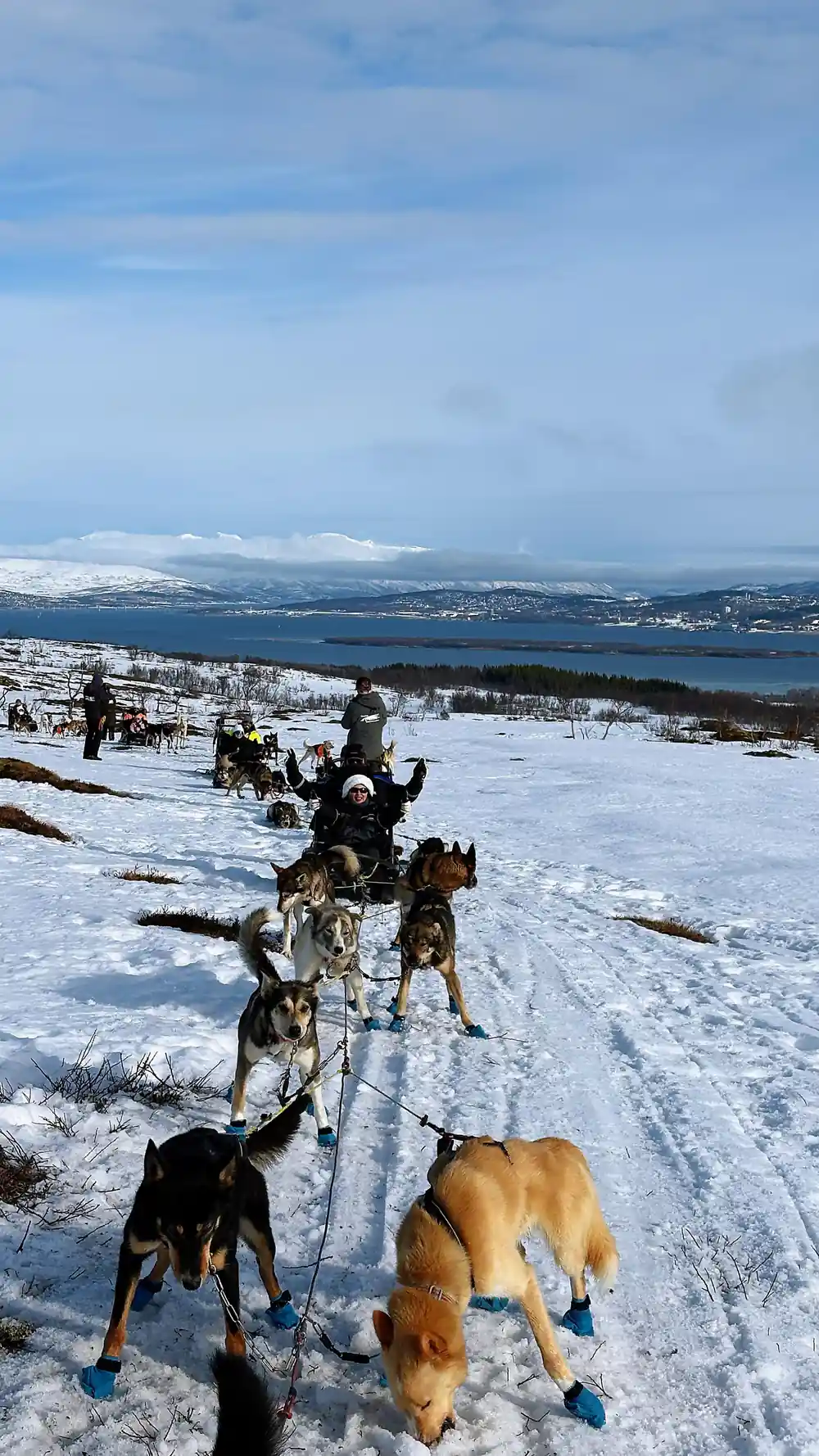
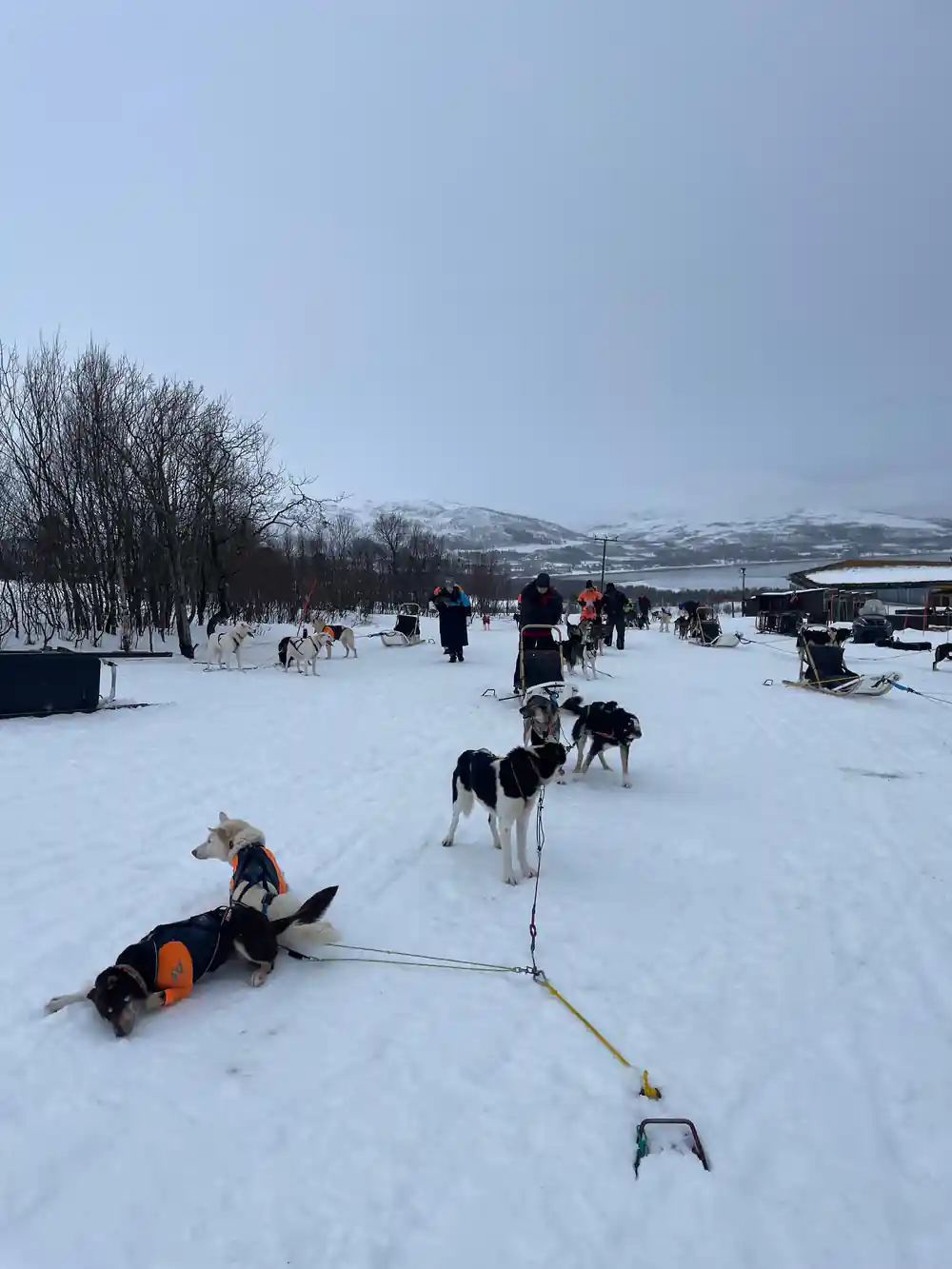
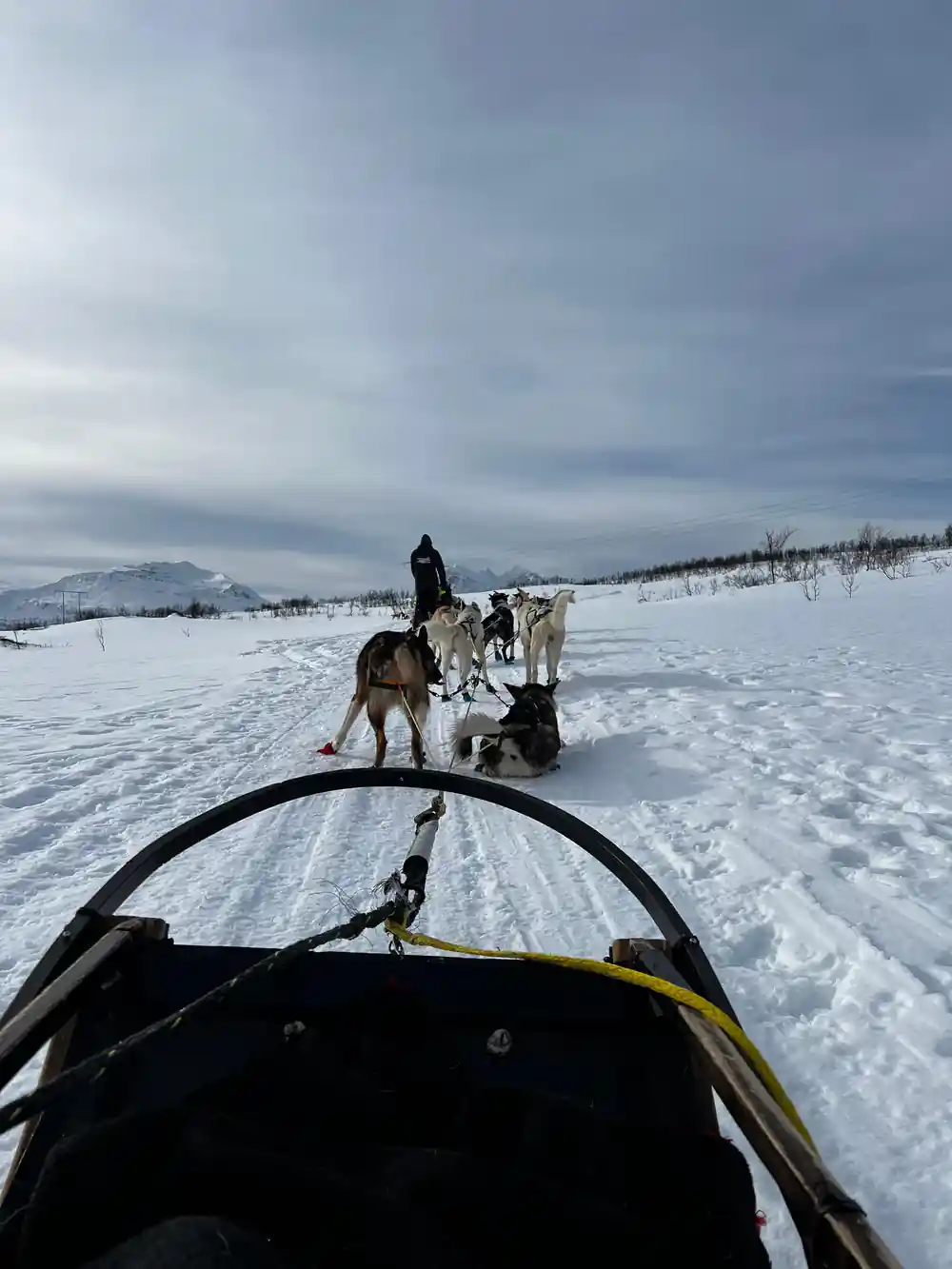
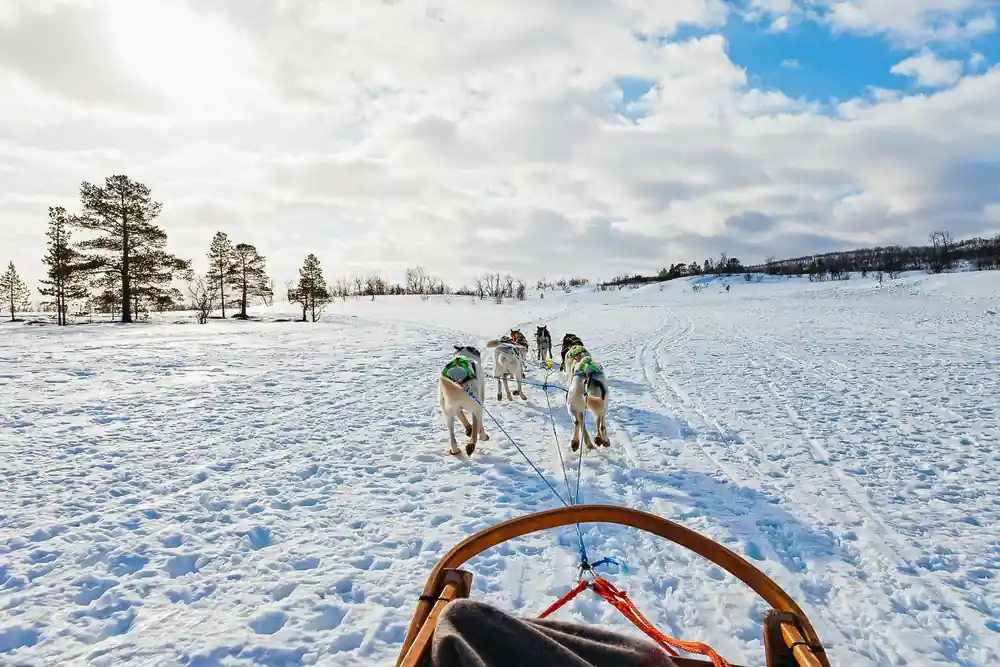
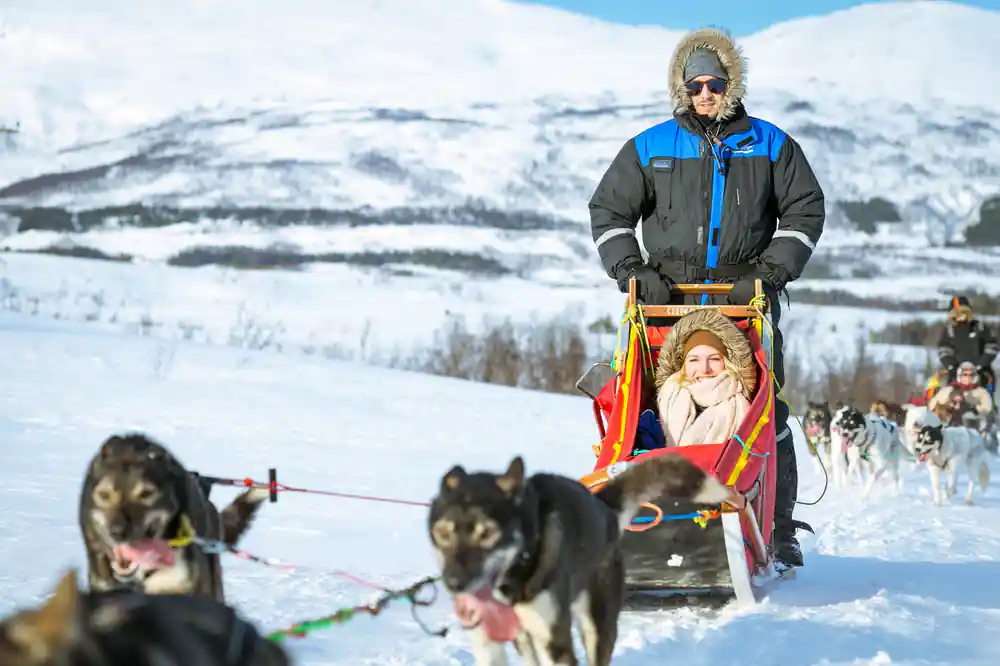
Most husky tours in Tromsø come down to a simple choice: you either drive the sled yourself or you ride as a passenger while a musher stands behind you. On the Tromsø: Husky Sled Self-Drive with Traditional Lunch, the sled is yours. You stand on the runners, hold the handlebar and guide a team of Alaskan huskies across the snow.[1][2] Snow softens the landscape into rolling hills, and the only sounds are the crunch of runners and the eager panting of the dogs. The air is clean and sharp, and the low winter sun throws long blue shadows across the plateau.
The other shape is a guided ride. You tuck into the sled, wrap up in the blankets, and let someone else handle the lines while you watch the valley slide past. Both happen in the same landscape of white plateaus and birch forest, but the feeling is very different. For many travellers, the best dog sledding Tromsø offers is the kind where you have a hand on the handlebar yourself. Being athletic isn't required, yet you'll want some steadiness and a readiness to grip tightly. If you are travelling with someone who wants to drive and someone who wants to watch, look for a tour that lets you swap places on the trail.
Driving your own team
Self-drive is more absorbing. You feel every pull through the handlebar, hear the dogs breathing, and learn to lean when the sled swings around a corner. The first few minutes are the most magical. The dogs surge forward before you have time to be nervous, and the sled slides from a standstill into a smooth, hissing glide. This site's tour lasts 4 hours and carries a rating of 4.86 from 2,050 reviews.[1] You can reserve now and pay later, and cancel up to 24 hours in advance for a full refund.[1]
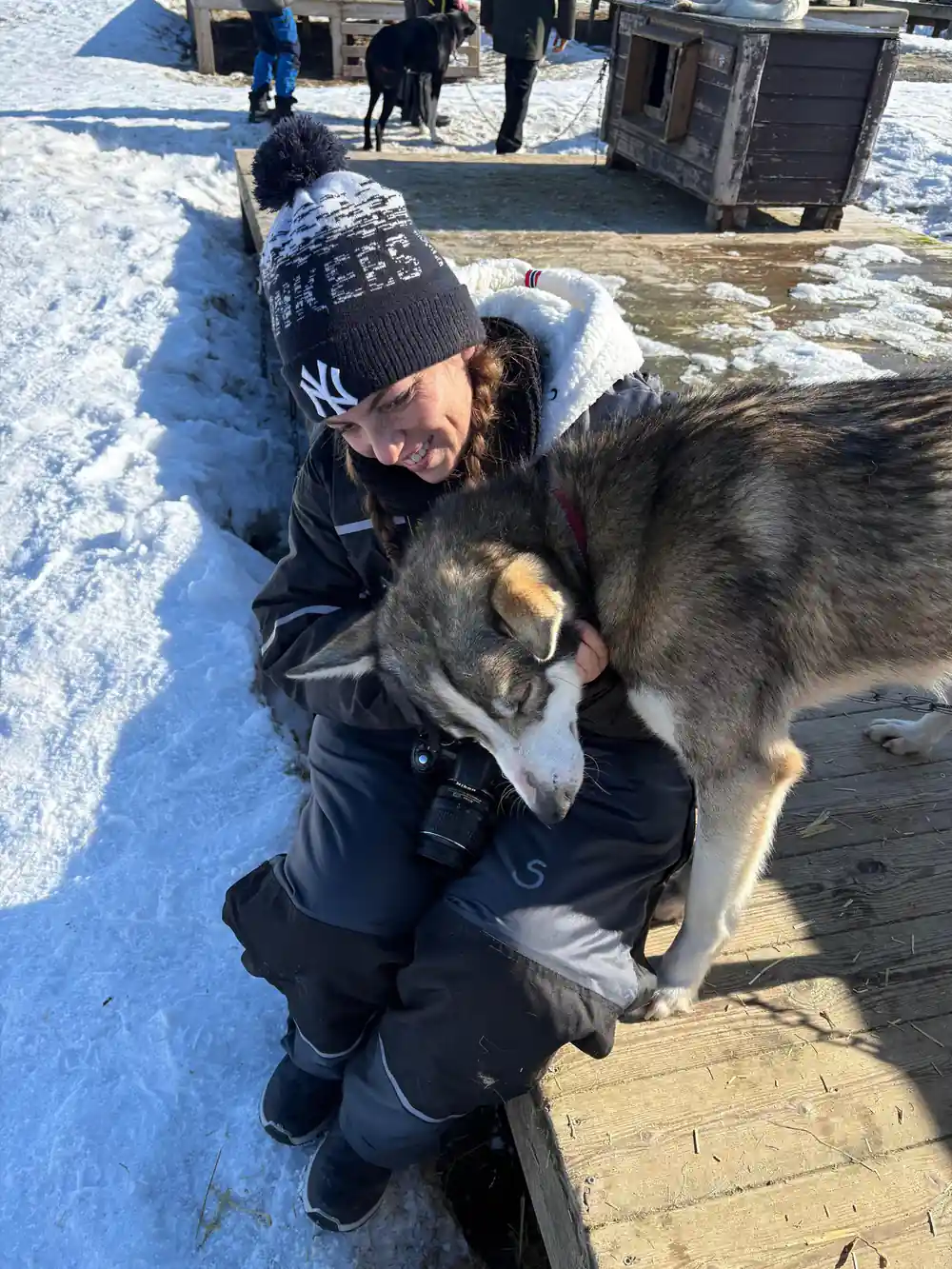
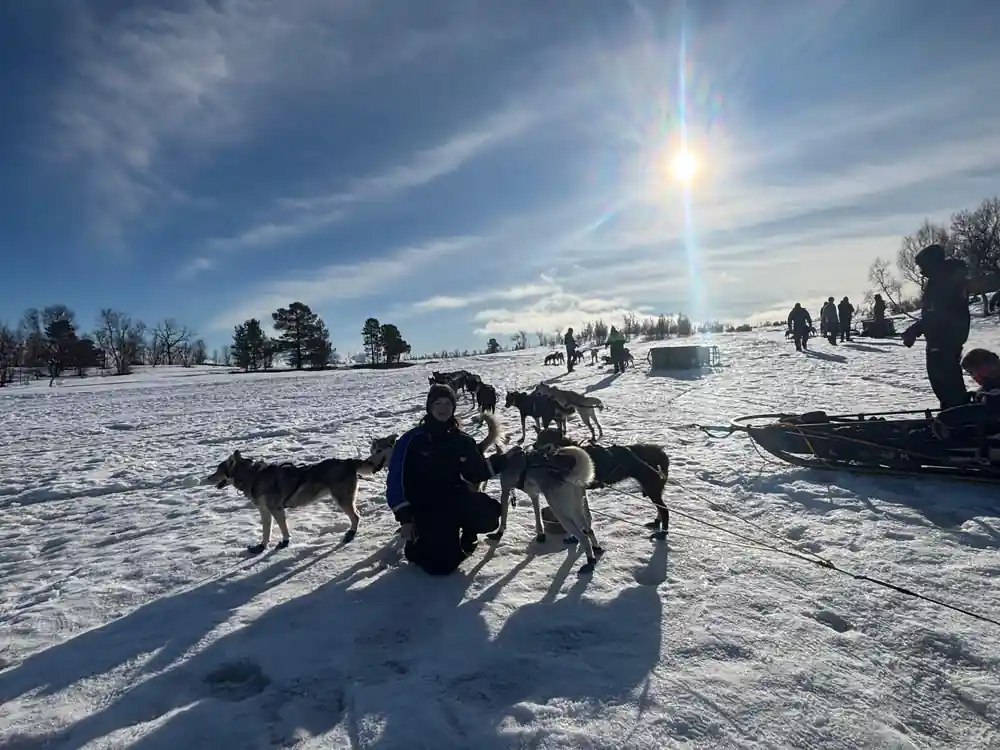
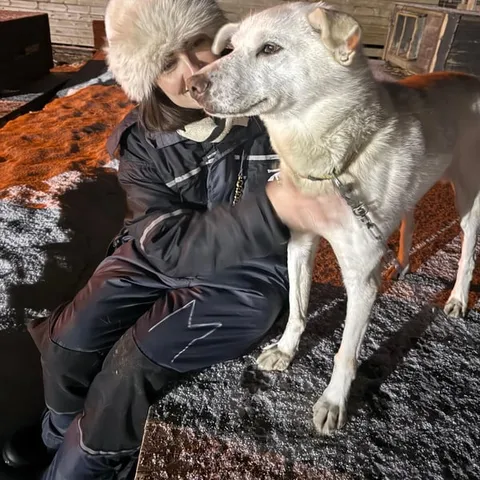
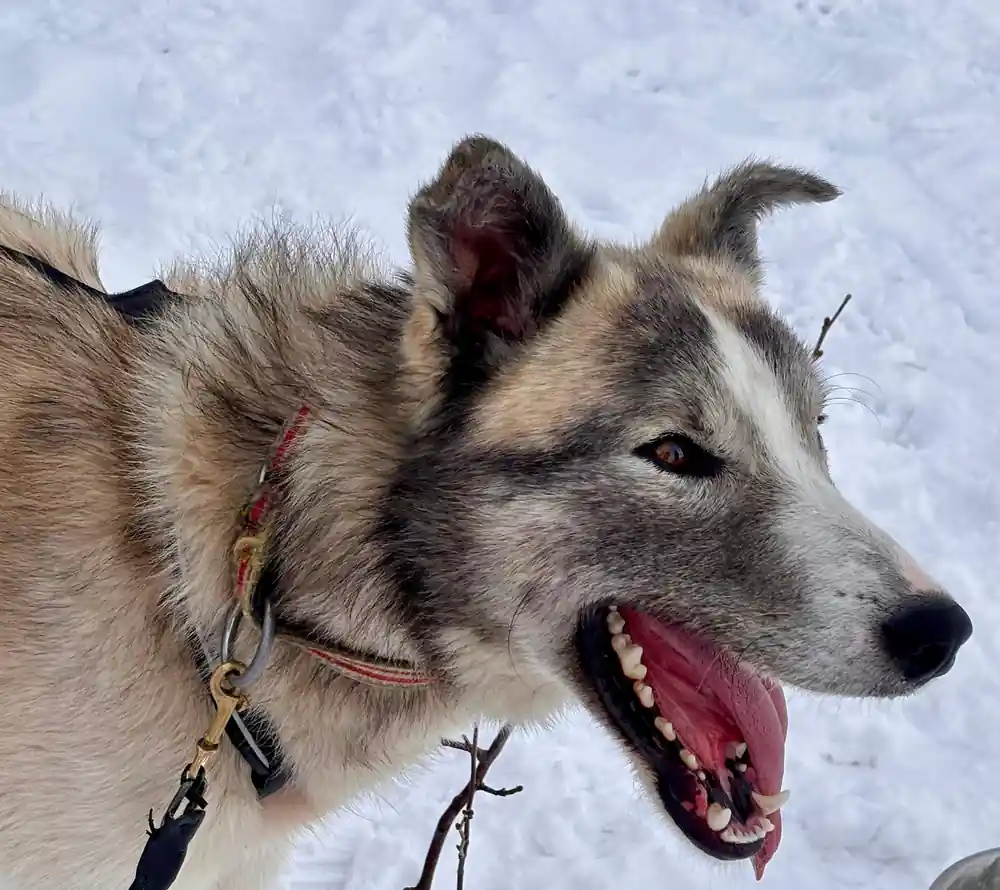
You can be a first-timer; the dogs know their job, and your job is to stay balanced and enjoy it. Teams of Alaskan huskies are widely used for dog sledding in Tromsø.[2] The kennel dogs are athletes and characters at once. Some bark with impatience, some wait with one ear cocked, and all of them seem to know exactly what happens next. Take a moment to say hello before the harnesses go on. For a taste of the sport in its most demanding form, Finnmarksløpet is the longest among dog-sled races in Europe.[8] Your half-day behind the dogs is a much gentler introduction.
A musher stands behind as the team pulls through powder.
Riding instead of driving
If you would rather watch the trail than work the runners, a passenger tour lets you ride wrapped up while a musher drives. It is the right choice for anyone who wants the scenery without the effort, or for a child sitting between two adults with a blanket over their knees. Some visitors choose this on a cold afternoon or when travelling with children. The Northern Lights Husky Visit with Traditional Dinner is a 4-hour option from US$188[3], though it is not the tour booked on this page.
There is also a full-day Dog Sledding Adventure in Tamokdalen, a 7-hour excursion from US$356.[4] A longer transfer and a different valley make it a bigger commitment. For some travellers, the longer day is worth it for the sense of distance. You cross a bigger landscape and return with a deeper appetite. If you are still deciding, the self-drive half-day is a balanced middle ground.
How long the day should run
The tour booked from this site is a half-day format lasting 4 hours.[1] That is enough time to get kitted, meet the dogs, drive a sled, and still have the afternoon for something else. Half-day is also easy to fit around a flight or another activity. You can be back in town with time to warm up, eat again, and still catch the evening aurora. Check availability for starting times.[1]
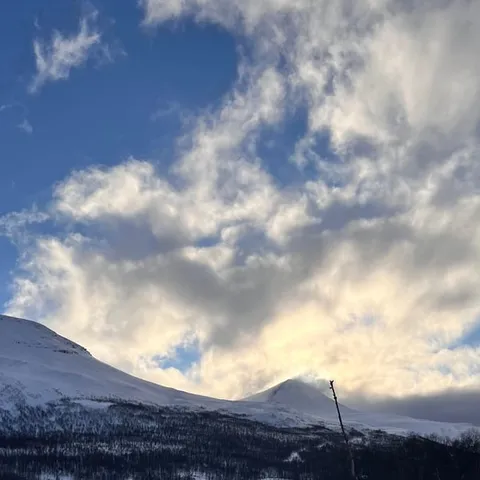
Tromsø sits 400 km to the north of the Arctic Circle, at 69°N.[9] In midwinter the polar night lasts approximately from 27 November to 15 January.[5] The average winter temperature is around −4°C.[6] A morning start makes the most of whatever daylight you get, and for the best Tromsø dog sledding, the half-day length keeps the pace comfortable. The changing light is one of the quiet pleasures of winter. In the darkest months, the light stays blue for much of the daylight, and towards the end of the season the sun climbs high enough to make the snow glitter.
from US$355
The self-drive husky tour in Tromsø runs 4 hours with a traditional lunch, rated 4.86 from 2,050 reviews.[1]
What a sit-down meal changes
A tour that includes a proper meal changes the shape of the day. The listing here is Husky Sled Self-Drive with Traditional Lunch, meaning the afternoon moves from the trail to a warm table. That is the difference between a quick snack and a proper pause. A hot meal after exertion is not just comfort; it is part of the ritual. You sit down with other travellers, compare stories about who nearly fell off, and watch the steam rise from your plate.
Meals also matter when the temperature is around −4°C and your cheeks are stinging.[6] Sitting down with something hot gives you time to let the feeling return to your fingers and to ask the guides about the dogs. Even if you are not a food person, the pause matters. Your legs get a rest, your toes begin to thaw, and the dogs get their own well-earned break before the run back. The tour lasts 4 hours.[1]
Who each format actually suits
Self-drive suits travellers who are sure-footed and want a story to tell. You need to be comfortable standing on the runners, holding on, and shifting your weight. It is a joy for active adults and older teenagers. If you are travelling with two people who both want to drive, check whether you can swap places on the trail. The first pull of the sled is a moment you will replay for years, and there is nothing quite like the quiet that follows when the dogs settle into their rhythm.
Riding suits anyone who prefers to watch, or travellers who do not want to stand on a moving sled. Children and older adults often love the passenger position because they can see everything without worrying about the mechanics. The full-day version suits people who want a longer excursion into the mountains. Think about what you want to feel at the end: tired arms and a huge smile, or a quiet ride with the scenery doing the work. There is no wrong answer, only the version that matches your energy and curiosity.
Planning your husky day around Tromsø
When to book is partly about snow. Dog sledding on snow is usually available from November to April, depending on snow conditions.[2] Within that window, the polar night gives a strange, blue-lit middle, while late-season tours run in brighter light. The northern lights may be visible from late August to early April, whenever the sky is dark and sufficiently clear.[10] The same snow that makes dog sledding possible also shapes the rest of your trip. You can combine a husky day with a reindeer visit, a fjord cruise, or an evening northern lights chase.
If you want to pair a husky day with northern lights hunting, aim for the winter months. If visiting in summer, expect the midnight sun from about 20 May through 22 July.[11] From Tromsø Airport to the city centre, travel time is usually about 10-20 minutes.[7] And if you are weighing up dog sledding tours, the best husky sledding in Tromsø will be the one that matches your confidence on the runners. If you are visiting earlier or later in the season, ask the operator about snow conditions before you book. The guides want you on the trail when it is at its best.
Dog sledding from-prices
From-prices from GetYourGuide listings:[1],[4],[12],[13],[14].
Compare husky tour prices
US$ from-prices from GetYourGuide listings:[1],[4],[13],[12].
When to book your husky day
How to book and prepare
Choose your format
Decide whether you want to drive the sled or ride as a passenger. The tour on this page is a self-drive husky sled with traditional lunch.
Reserve your place
Book online with reserve now and pay later.[1] You are entitled to a complete refund when cancelling no later than 24 hours before.[1]
Dress for the cold
Wear warm layers, windproof outer clothing, gloves and winter boots. The average winter temperature is around −4°C.[6]
Get to Tromsø
Allow time for the transfer. From Tromsø Airport to the city centre, travel time is usually about 10-20 minutes.[7]
Meet the dogs
Arrive ready to listen to the briefing, meet your team, and find your place on the runners.
Ready to drive your own husky team?
from US$356Reserve now & pay later