The quick version
- Drive your own husky sled in the Tromsø region with an English-speaking guide, then sit down to a traditional lunch.[1][2]
- US$355 is the starting rate, and the booking lets you reserve immediately and settle later, with no cancellation fee if you cancel 24 hours ahead.[1]
- The full experience lasts 4 hours, including preparation, sledding and lunch.[1]
- Dog sledding on snow usually runs from November to April, depending on conditions.[2]
- Alaskan huskies are the working dogs you will meet at the kennel.[2]
- Top choice Self-Drive with Lunch from US$355 Duration4 hours[1]Rating4.86 from 2,050 reviews[1]FormatSelf-drive sled with lunch Check availability
- Northern Lights Husky Visit from US$188 Duration4 hours[3]Rating4.64 from 1,732 reviews[3]FormatHusky visit with dinner See this tour
- Dog Sledding in Tamokdalen from US$356 Duration7 hours[4]Rating4.86 from 1,530 reviews[4]FormatDog sledding in a valley See this tour
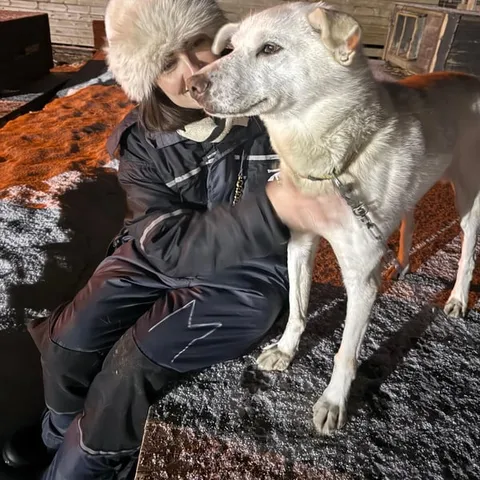
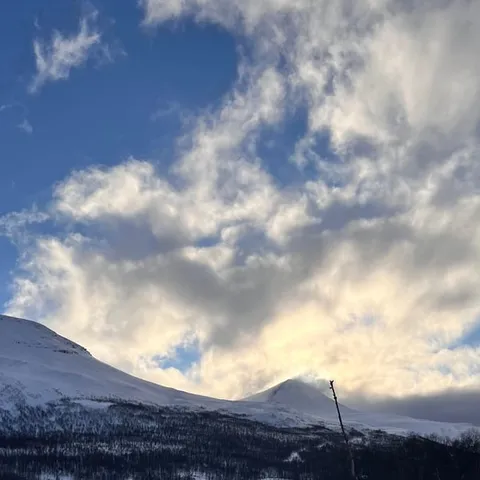
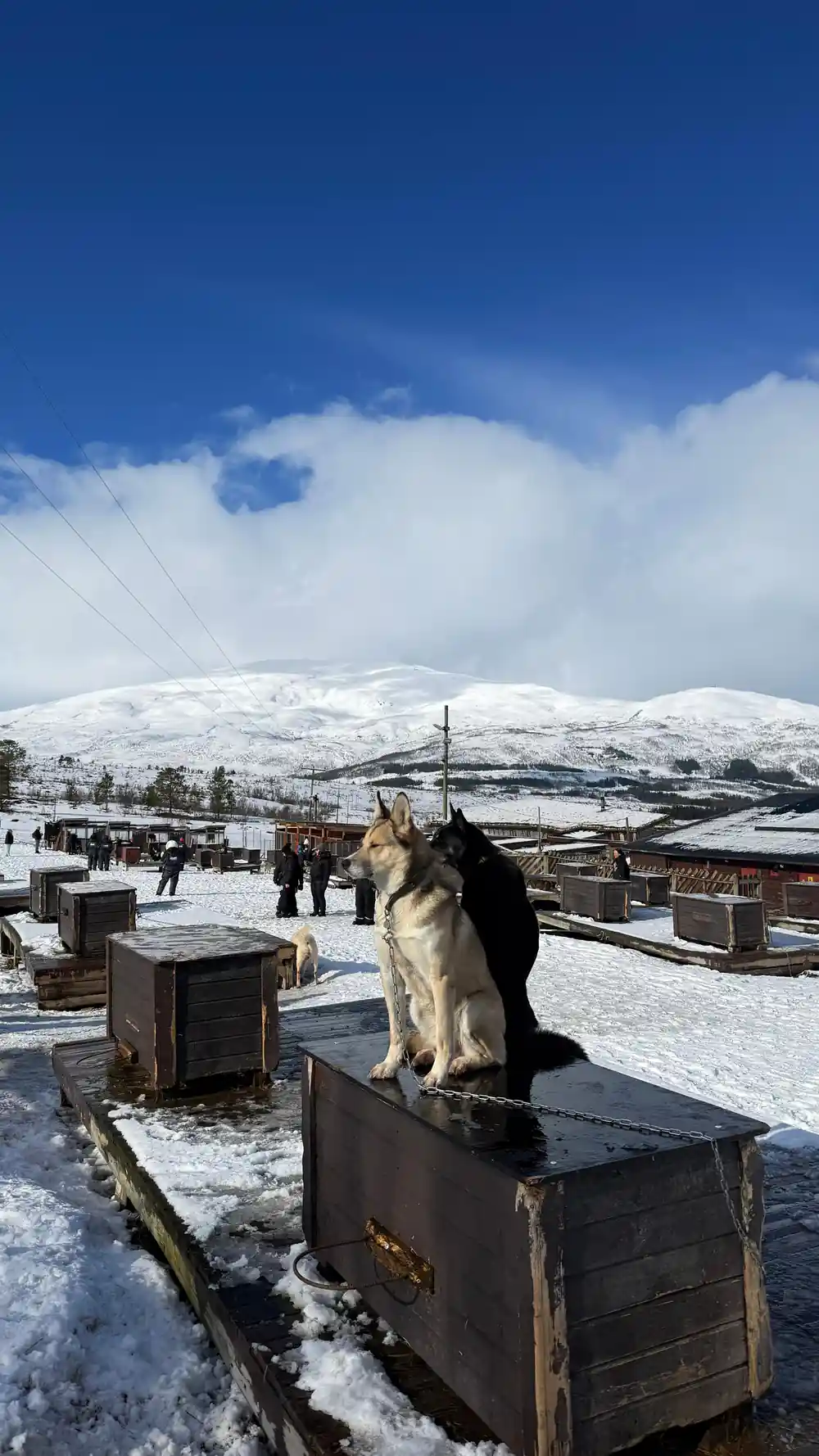
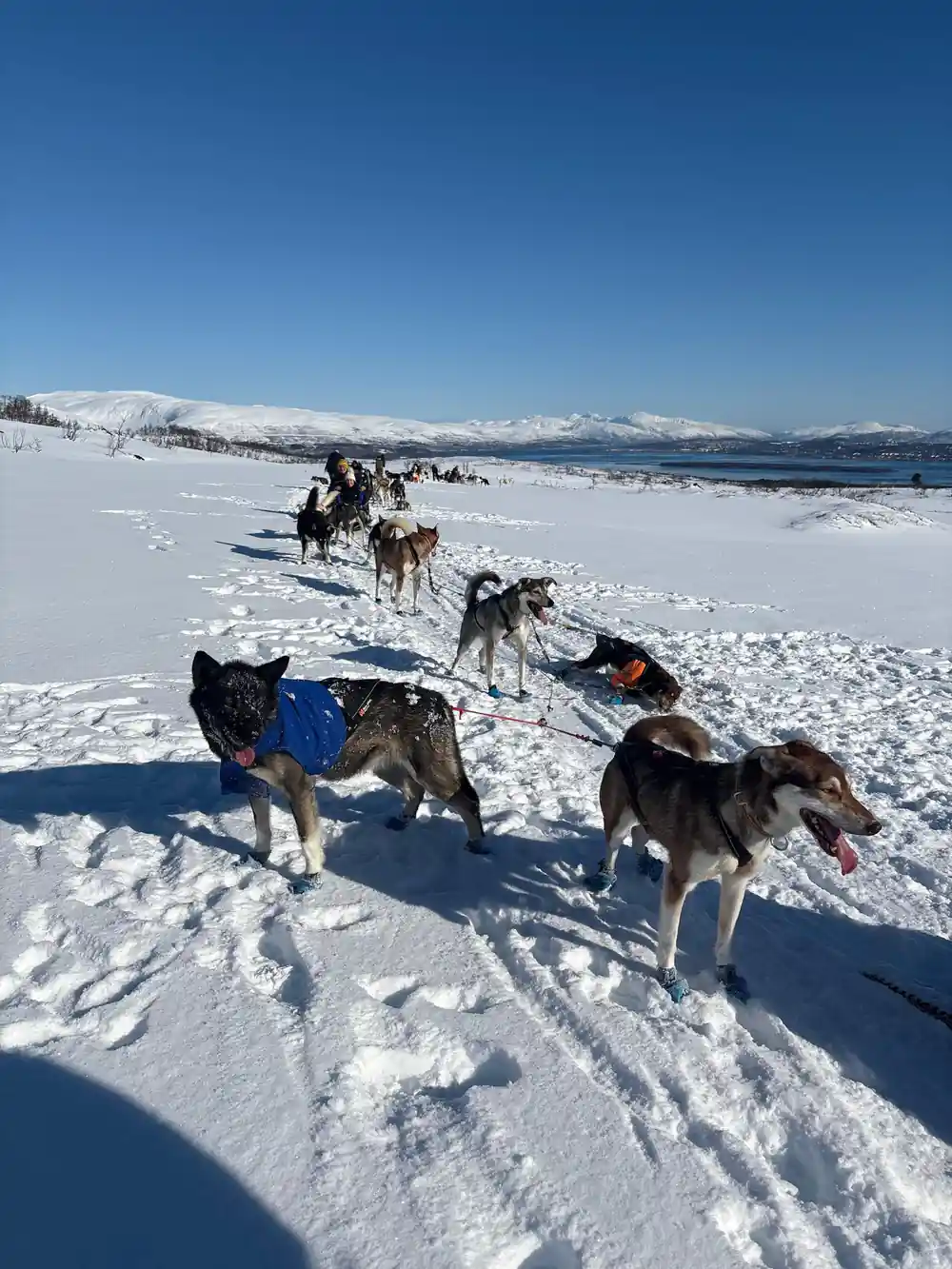
Alaskan huskies are widely used for dog sledding in the Tromsø region.
Is the self-drive husky tour worth it?
Read before booking
What Self-Drive Actually Means
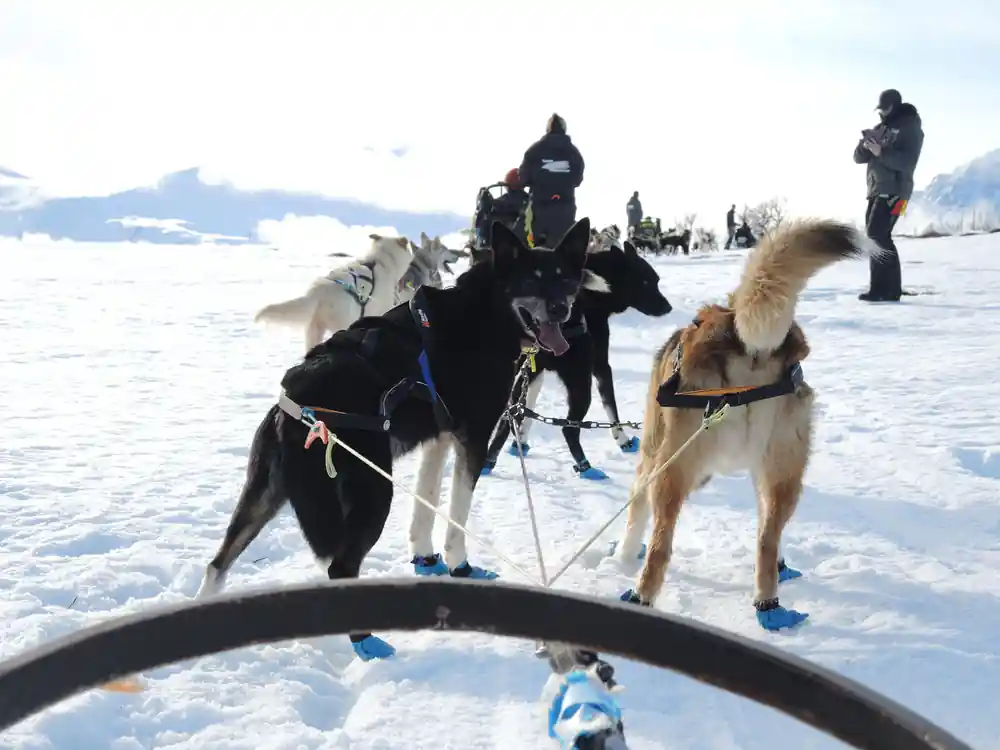
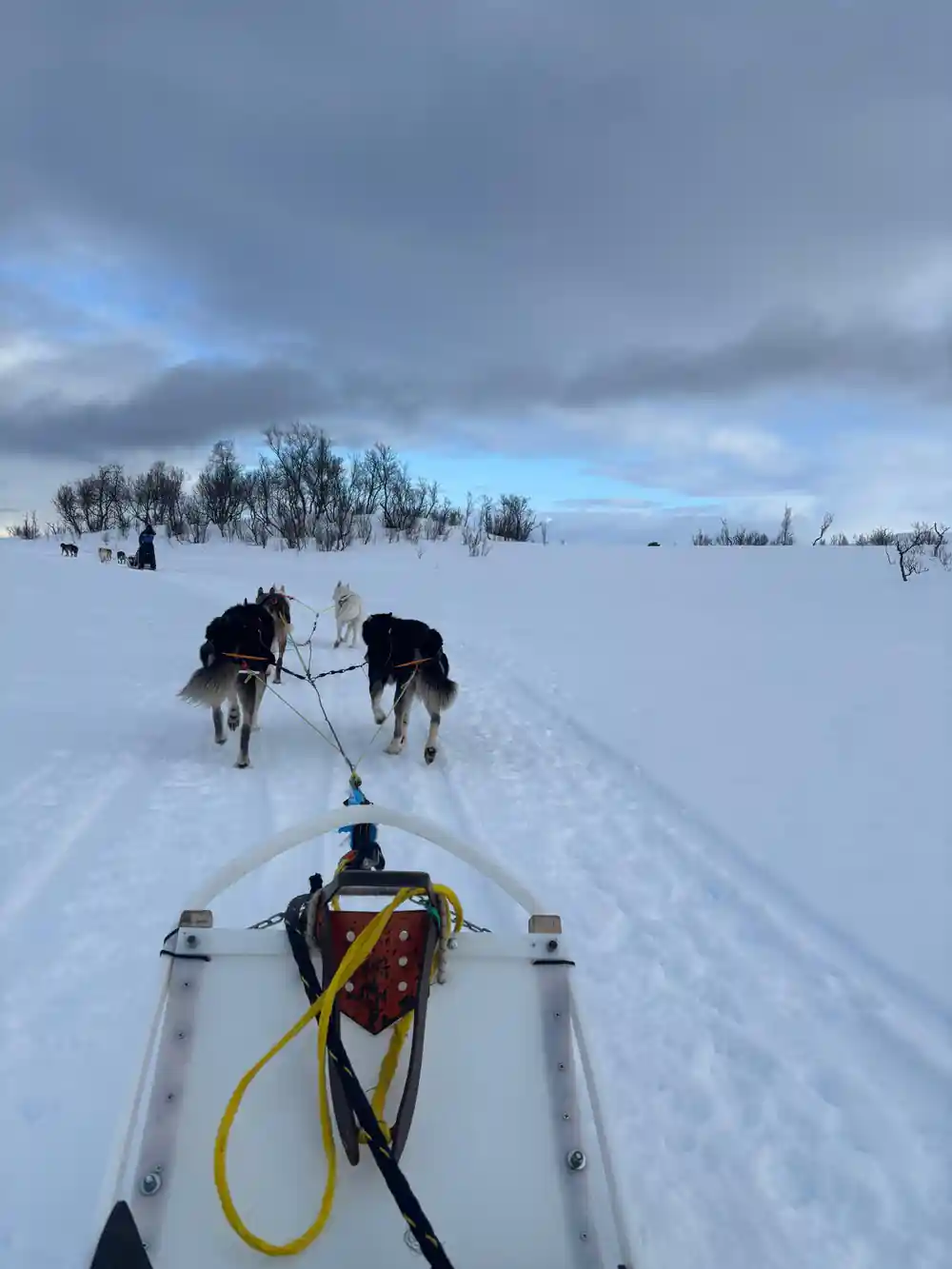
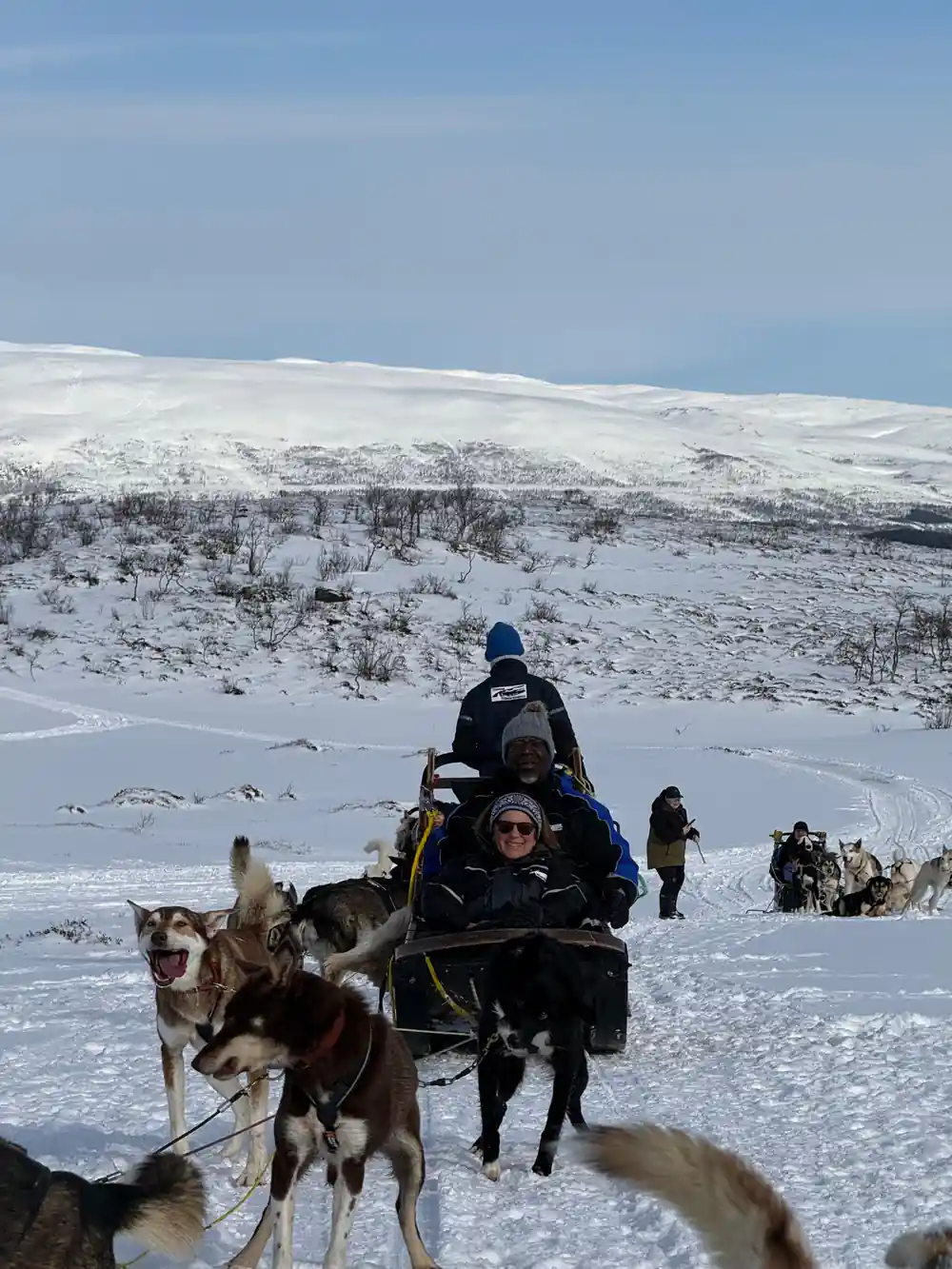
On this tour from Tromsø, self-drive means you are the musher. You stand on the runners of a sled being pulled by a team of huskies, with the trail stretching ahead across open snow. It is not a spectator activity. A live tour guide speaks English throughout, and the whole experience lasts 4 hours.[1] You will feel the sled move under your boots, hear the dogs breathing, and learn the small shifts of weight that keep the sled running straight. For anyone who loves dogs, the first sight of the team is the moment the trip becomes real.
Alaskan huskies are widely used for dog sledding in the Tromsø region.[2] You will meet eager, athletic animals with a strong instinct to pull. In winter, Tromsø averages around −4°C.[6] For a genuine Tromsø self drive dog sledding experience, you need to trust the team, listen to your guide, and find a rhythm on the runners. The dogs know what is expected, and once you relax, the whole outing starts to flow.
There is a difference between watching huskies run and driving them yourself. On the runners, you feel every pull and pause. The dogs are working animals, but they are also companions, and the kennel staff treat them with obvious care. It is that mix of adventure and affection that makes the tour memorable.
Standing on the Runners: The Basics
Before any sled moves, your guide runs through the controls. The brake is a set of claws you press into the snow to slow the team. Steering comes from leaning, shifting your weight, and letting the dogs follow the trail. The staff show you what to do before the first run, and you are not left to work it out alone. It helps to be steady on your feet and comfortable with standing while moving over snow. The first few minutes are the hardest; then your legs find their balance and the commands start to feel natural.
What you wear matters as much as what you know. Dress in warm layers, with a windproof outer layer, insulated boots, and good gloves. A buff or scarf protects your face, and sunglasses help on bright days. Tromsø's winter temperatures average around −4°C, and the wind from the sled makes it feel colder.[6] Tuck in any loose clothing, because you will be moving around and the last thing you want is a scarf catching on the sled. Small choices before you set off make the ride much more comfortable.
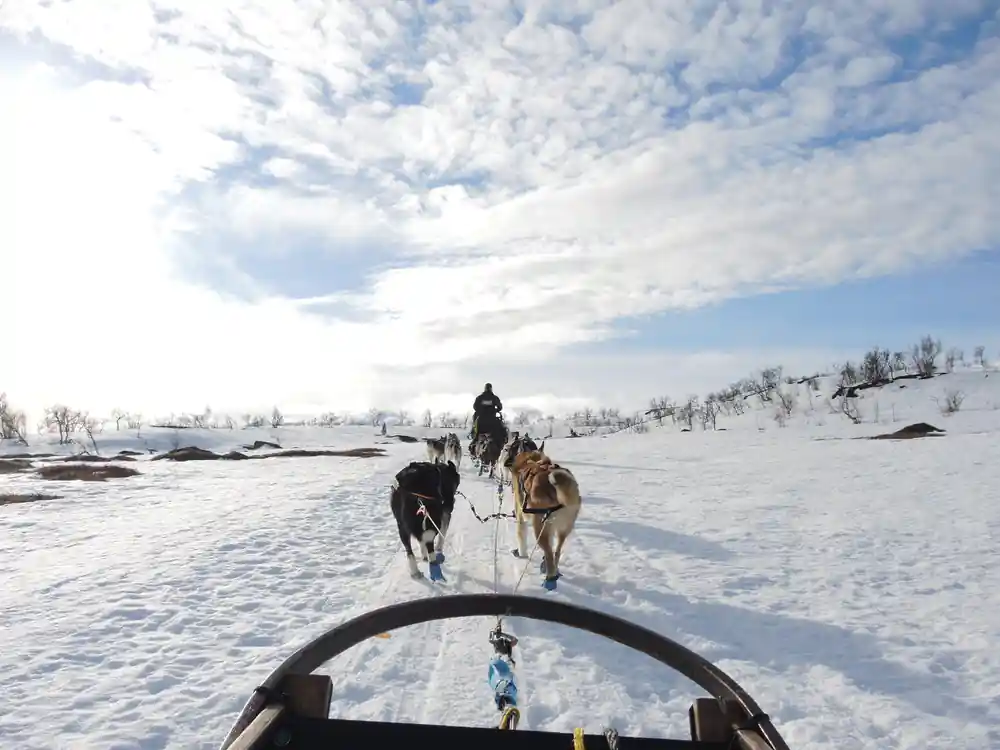
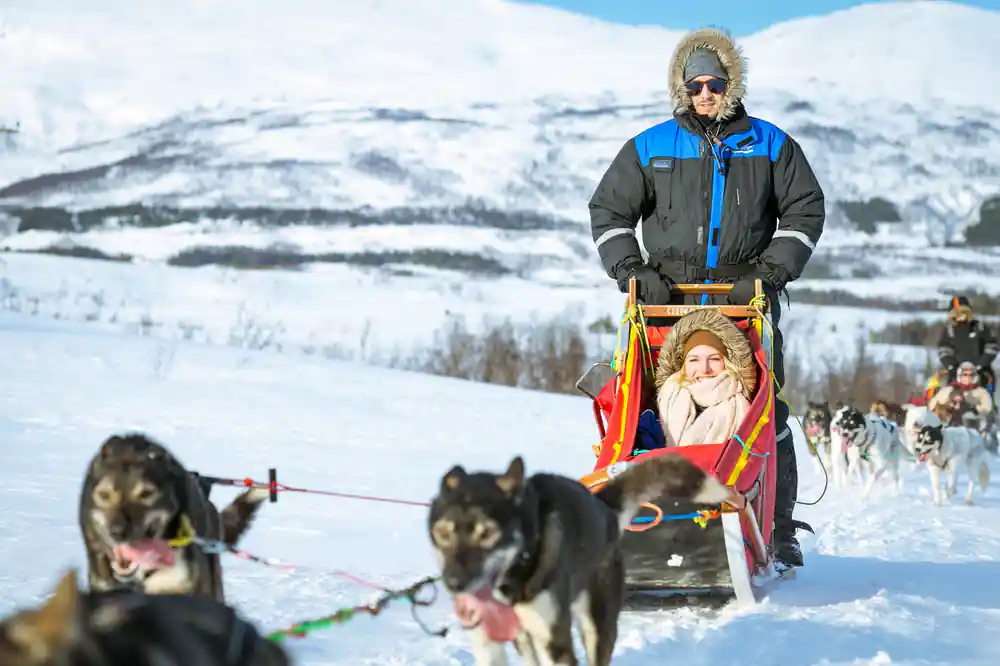
You and your team of huskies, with the winter trail ahead.
Taking Turns on the Runners
If you are travelling with a companion, there is a good chance you can swap places during the ride. One person takes the runners and learns the feel of driving, while the other sits tucked into the sled and watches the landscape glide past. Then you change over, and both of you get the full self-drive experience. The guide will signal when it is safe to switch, usually in a wide open stretch where the dogs can pause. Being the passenger is not entirely passive either; you still need to stay balanced and ready to help if the sled tips slightly.
A Tromsø husky self drive trip works best when you communicate clearly. Talk about commands before you start and agree on how you will slow down. Keep your weight balanced when the dogs pull away, and avoid gripping the sled rope too tightly. The smoother you are on the runners, the happier the team will be. The dogs respond to calm voices and steady movements, and they will quickly learn to trust you. This is a shared adventure, and the dogs are very good at their half of the deal.
Even if you are riding alone, you are never far from support. The guide can see the whole group, and the kennel staff have thought through the trail so beginners stay comfortable. It is okay to feel nervous at the start. Once the dogs begin to move, most nerves disappear and the pure fun of sledding takes over.
An Active Morning on the Runners
It is called self-drive for a reason. You will stand for much of the ride, balance on the runners, and use your legs to help the dogs on uphill stretches. On downhill runs you press the brake to control speed. The physical side is part of the fun, but it also means you should be honest about your balance and stamina before booking. If you have knee or back concerns, ask the operator about the demands of the trail before you reserve.
You do not need to be a trained athlete. The dogs set the pace, the guide sets the route, and the trail is matched to the group. The tour lasts 4 hours, which includes the preparation, the time out on the snow, and a break for a traditional lunch after the ride.[1] That hot meal is a welcome reward for a morning spent working with the team, and it gives you a chance to warm up and talk over the adventure with the other travellers before heading back.
Think of the 4 hours as a complete winter experience rather than just a ride.[1] You will be outside in the cold, working with the dogs, and then sitting down to food inside a warm camp or lodge. The contrast between the snowy trail and the hot meal is part of the charm, and it makes the physical effort worthwhile.
from US$355
Self-drive husky sledding with a traditional lunch in Tromsø. Reserve now and pay later.
When the Dogs Need a Hand
Sled dogs are powerful, but they still need help from the musher. On soft snow or a rising slope, you may need to kick with one foot, scooter style, to add momentum. On descents, you use the brake to keep the speed safe. These are simple moves to learn, but they do take confidence, especially the first time you feel the sled glide away beneath you. Your guide stays nearby, and the commands are easy to remember once you have used them a few times.
The dogs are experts at their job. They know the trail and the commands, and they settle into a steady pace once the excitement of leaving the kennel fades. Your main job is to stay balanced, keep the sled pointed in the right direction, and trust the team. When everything clicks, the ride feels smooth and almost effortless, and you will understand why mushing is such a beloved winter sport. The bond between musher and dogs is the heart of the experience.
Plan Your Winter Day in Tromsø
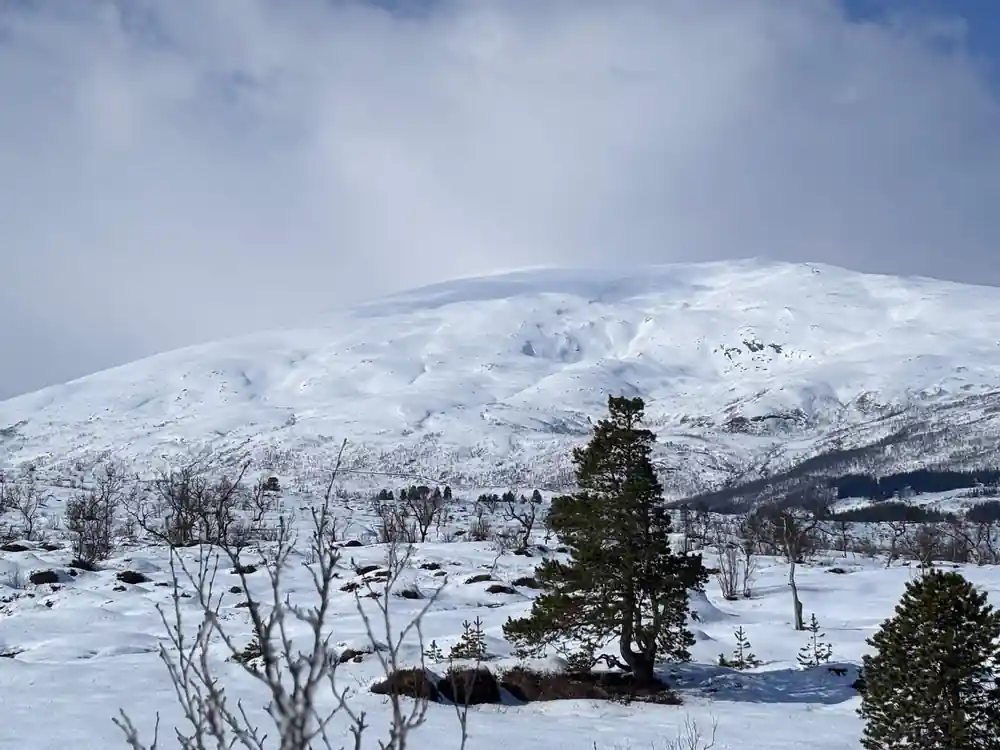
Timing is important for any winter activity in Tromsø. Dog sledding on snow is usually available from November to April, depending on snow conditions.[2] If you're hoping to pair it with the northern lights, know that the Tromsø region can show them from late August through early April whenever darkness falls and skies are sufficiently clear.[7] That gives you a wide winter window, but not every night will be clear. Build some flexibility into your plans and keep the sled tour as the anchor of your day.
Polar night runs around 27 November until 15 January.[8] In midwinter, you should expect limited daylight. Check availability to see starting times when you book.[1] The schedule is built around daylight and weather, so go with the flow and arrive dressed for cold. A short day can still hold enough light for the ride, especially when snow reflects the low sun and the landscape turns pink and blue. After the tour, you will have the rest of the day for Tromsø's museums, cafés or an evening aurora hunt.
If you are visiting from somewhere milder, take the weather seriously. Tromsø's average winter temperature sits near −4°C, but the wind from the sled makes it feel much colder.[6] Pack one more layer than you think you need, and keep hand warmers in your pockets. Comfort on the runners comes down to small preparations made before the tour begins.
Booking Your Self-Drive Husky Adventure
Booking is straightforward. The tour is listed from US$355, with free cancellation if you cancel up to 24 hours in advance for a full refund.[1] It's also possible to lock in the reservation now and settle later, offering flexibility as you finish arranging your trip.[1] Use the booking page to see real-time availability and pick a starting time that suits your day. Because winter weather can shift quickly, it is reassuring to know you are covered if plans change.
Your live guide speaks English, and the full experience lasts 4 hours.[1] The listing is for a self-drive husky sled with a traditional lunch; a warm meal follows the ride. Book online, check the meeting details, and give yourself time to get ready before the dogs start pulling. If it is your first time in the Arctic, add a few extra layers and arrive with an open mind. The dogs, the snow and the silence will do the rest.
Once you have booked, focus on the practical details. Check how to reach the meeting point, plan to arrive a little early, and make sure your phone is charged for photos. The team will handle the sled, the harnesses and the safety briefing. Your job is to be present, listen carefully, and enjoy the rare feeling of gliding across the Arctic snow behind a team of dogs.
Husky sledding tour durations from Tromsø
Husky sledding prices from Tromsø
USD from-prices.[1][9][10][11][12]
When to book your husky trip
How to book and prepare
Check availability
Choose a date from the tour page and verify what start times are available.[1]
Reserve now, pay later
You can reserve today and pay afterwards, and you may cancel as late as 24 hours prior to receive a full refund.[1]
Dress for winter
Pack warm layers, a hat and gloves. The average winter temperature is around −4°C.[6]
Meet your guide
Your guide speaks English and will explain how to drive the sled before you set off.[1]
Enjoy the ride and lunch
Take turns on the runners, help the team when needed, and finish with a traditional lunch.[1]
Book your Tromsø husky self drive adventure today
from US$356Reserve now & pay later